Showing posts with label gear. Show all posts

Monday, December 15, 2025

Pocket Knife Triptych

Tools With A Purpose


Three useful knives listed in the order in which I remember buying them:


Kershaw Baby Boa


Kershaw Baby Boa: photo by Cliff Hutson


Kershaw's Baby Boa knife, designed by Ken Onion. It uses a "SpeedSafe" torsion bar mechanism for assisted opening. This system allows the user to simply press the tang extension to snap the blade open and lock it in place.


Kershaw Chive


Kershaw Chive: photo by Cliff Hutson


The Kershaw Chive, also designed by Ken Onion, is one of the most popular assisted opening knives ever made.


Leatherman Skeletool KBx


Leatherman Skeletool KBx: photo by Cliff Hutson


A versatile combination blade, that can make precision cuts and slice through tougher materials. The built-in bottle opener on the clip is handy as well.


EDC


Knives are tools, functional items many people integrate into their daily lives. I have used the Skeletool as a regular part of my EDC for about two years. However, I will be switching back to the Chive as I believe it is easier to deploy. The Baby Boa is a good knife, but it is not as comfortable for me to handle as the other two and it is important that one be able to use their tools.


Monday, November 17, 2025

Tradecraft

 Use Your Tools


Tradecraft: photo by Cliff Hutson


"Technology gets better everyday. That's fine. But most of the time all you need is a stick of gum, a pocket knife and a smile."


- Nathan Muir 


Pocket Knife: photo by Cliff Hutson


Monday, December 23, 2024

Fútbol

El fútbol es vida 


"Fútbol is life" is a famous catchphrase from the character Dani Rojas in the Apple TV+ series "Ted Lasso," which emphasizes the joy and passion associated with soccer. 


Seemly, it is also a fashion choice:


All writing and images ©Cliff Hutson unless expressly noted. Do not use without permission.


Monday, July 15, 2024

My Shinola

 Does anybody really need a Rolex?


Shinola Runwell: photo by Cliff Hutson


Once again I was hunched over my table struggling with the, admittedly, increasingly arbitrary deadline for this blog. [Really, who would notice if I missed publishing on a Monday: or even skipped a week altogether?] But, then I fortuitously ran across a photograph of former President Obama wearing the same watch that I had purchase back in 2017.  It is a Shinola 41 mm Runwell Sub Second. So, that makes two things that we have in common.

Clearly, he is a person that can afford, or has already been gifted, any watch that he wanted. Yet, he chose this “affordable” one. My grandson, who follows these things, says that Obama also has a Rolex. But, the GQ story got me to thinking, does anybody really need a Rolex? Apparently, I am not the only one who has had this thought.


Note:


Readers of my generation might recognize that the title of this post is a play on the title of a well known song.


Monday, July 8, 2024

Photo a Day

 AKA: Photography 365 Challenge


Another Monday, another cop out.  One might think that a retired person who has made a commitment to post to their blog every Monday should be able to easily follow through on that with something at least a bit substantial. But, once again, I got distracted and am resorting  to a fluff piece.

I am in the middle of an ongoing Photo a Day (PaD) project. The photo at the top is the one that I am using for today's effort. What follows is a random sampling from this year.


The project has become a mix of food photography, street photography, nature photography, and what may as well be called snapshots.  Some days the result is much better than others. If your curiosity has been piqued, the oeuvre is available in my PBase.com gallery. 


All writing and images ©Cliff Hutson unless expressly noted. Do not use without permission.


Monday, December 4, 2023

National Sock Day

 There seems to be a day for everything:


A clothing company called Pair of Thieves created National Sock Day. According to the company’s website, they started this day “to warm our toes with the commemoration of two toe-tapping historical events that happened on this day.” In 2016, it was officially declared that National Sock Day would be celebrated annually on December 4.

I actually have three pairs of their colorful crew socks. But, as they are they are all in the laundry hamper they are not available for a photograph today. However, I do have a sampling from other textile manufacturers, taken over the years.


It seems that I can add socks to the category of things of which I have too many - along with hats and jackets. And, it is not like that I wear them every day.


#NationalSockDay


All writing and images ©Cliff Hutson unless expressly noted. Do not use without permission.


Monday, October 23, 2023

National iPod Day

 National iPod Day is celebrated on October 23


iPod classic: photo by Cliff Hutson

National iPod Day is observed annually on October 23, in recognition of the portable music device. 

iPod shuffle: photo by Cliff Hutson


The first version of the iPod was released on October 23, 2001. Apple discontinued the iPod product line on May 10, 2022. They are gone, but not forgotten.


iPod nano: photo by Cliff Hutson


I owned quite a few iterations over the years. Oddly, I can not find any photographs I made of the two or three iPod touch models I had before switching to an iPhone.

[Note: I once shot a video with the iPad nano.}


All writing and images ©Cliff Hutson unless expressly noted. Do not use without permission.


Monday, September 5, 2022

Labor Day

Whatever the work is, do it well:


Lunch Box: photo by Cliff Hutson


Today marks Labor Day's 140th anniversary in America. It is a federal holiday observed annually on the first Monday of September. The day celebrates the labor movement in the US and the contributions and achievements of the American worker.

This year, the day has been more in the forefront of my mind as for my birthday a friend gave me a classic lunch box that reminded me of from whence I came.  

Working-class kid:


The term “working class” often typically describes members of the labor force that do not hold a bachelor’s degree. Common working class occupations include restaurant employees, auto mechanics, construction workers, and service-type workers.

My father owned his own business, but it entailed a lot of hard physical labor. And, from the time I was tall enough to push a broom and until I entered college I worked alongside him as much as my schooling and sports allowed. One reason why I like the new lunch box so much is that it reminds me of how we carried our meals and snacks when out on a job.

[Note: I just finished watching the "A League of Their Own" series on Amazon Prime Video. I enjoyed seeing all of the lunch pails in many of the scenes at the screw factory.]

I also found jobs on my own. Thus, I ended up mowing lawns, pulling weeds, clearing brush, and doing janitorial work in my tweens (that was not a term back then) and teens. One job of a different sort was helping an architect measure buildings to aid in his design of renovations to them. That got me to thinking about going to college and moving on up in the world.

A good union job:


Working with my Dad was hard. But, it was honest work and I took a great deal of satisfaction in it. However, I could see that it had its limitations and knew that I would have to strike out on my own. 

Labor Day grew out  of the labor union movement. The fortunes of organized labor have ebbed and flowed over my lifetime. When I entered the official workforce, around one-third of U.S. workers were members of a union, and I became one of them. Sadly, to my way of thinking, today, union membership is at just 10 percent of workers, with local government employees accounting for most of those. 

There is no doubt in my mind that collective bargaining boosted my pay, improved my benefits and give me some modicum of control over my schedule so that I could work part time and carry nearly a full load in college. I was able to cover all my expenses - rent, food, tuition, and so on - and graduate with out any debt. 

Through no fault of their own, many young people today will not be able to do the same, should they have the same desire. Jobs like that just do not seem to exist in the County of Los Angeles where the "minimum wage" is well short of the "living wage".

You are not the work you do; you are the person you are:


Office Space: photo by Cliff Hutson


Since graduating college, I have had many kinds of jobs, but I have never considered the level of labor to be the measure of myself, and I have never placed the security of a job above the love of family. 

And, even though most of my tech career was spent behind a desk as a manager I was always pro union. I believed that what was good for the people who were on my team was also good for me, and ultimately the business. May be that is why I never made the "C-suite'. 


Monday, December 20, 2021

Life in the Time of Corona: Travel Rules

 Planes, Trains, or Automobiles?


Union Station: photo by Cliff Hutson

It is clear that COVID-19, and its variants,  has disrupted travel plans for two and a half years.  Many of us are reluctant to travel at all. Those who do are subject to a lot of rules and regulations.

Is the omicron variant making you rethink your holiday plans? 

I am one of those staying at home. But, that does not stop my mind from from wandering and Tim Cahill's rules for traveling come to mind. Cahill is, for my money, one of the best of the travel/adventure writers of all time. Years ago, he came up with a list of rules to follow when traveling that I have enjoyed returning to time and again. So, at the risk of copyright violation, I am going to include his list (with my annotations) in this blog.
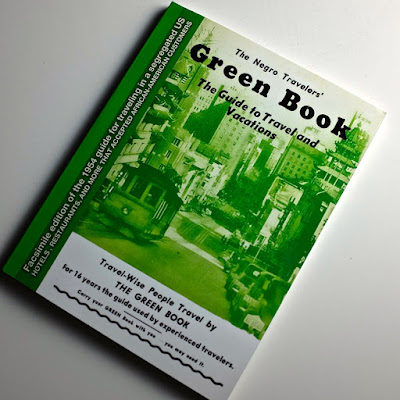

The Green Book: photo by Cliff Hutson


Tim Cahill - A Travel Pro's Advice:

Rule 1: Avoid psychotic travel companions. Here's the nightmare: It's two in the morning. You are sitting around the campfire speaking slowly, with exaggerated calm, enunciating each word very, very carefully. You are saying, "Give me the gun, Laszlo. Give me the gun, Laszlo. Give me the gun, Laszlo."


Rule 1, corollary 1: The most carefully chosen travel companions become the most psychotic.


Rule 1, corollary 2: Psychosis is contagious.


Rule 2: Have a quest. The quest is the most significant and consequential of all travel plans. What you really want to do is meet indigenous folks, understand their concerns, find out how things work, make friends. You don't do this in the company of traveling English-speakers. So have a quest, some bit of business that will shove you into the cultural maelstrom. Perhaps you have distant relatives in the country. Look them up. That's your quest. It will force you to use the phone book (people in Iceland, you'll note, are listed by their first rather than last names) and to arrange transportation to an area of the country that is not likely a tourist destination. Perhaps you're interested in trains, or motorcycle clubs, or ecological issues. Find locals who share your passion. You'll make friends. 


Rule 3: Exercise ordinary caution. Never, never, never put a marshmallow in your mouth and try to feed it to a bear. 


Rule 4: You are the protagonist. There is a variety of travel book currently in vogue. The writer, a man or woman broken by a bad relationship, sets off on a journey designed to heal the soul. By the end of the book, the formerly tortured scribe is figuratively knocking back margaritas in an orgy of cleansing regeneration. 

Used to be, we sent mythical or fictional characters on such journeys. Gilgamesh searching for the answer to death; Odysseus on a ten-year voyage of discovery; Dante and Orpheus in hell; Huck Finn on the Mississippi. These days, we tend to be more democratic in our mythology. You get to be the driving force. Make your myth a good one. 


Rule 5: Boredom greases the cogs in the machinery of marvels. In The Immense Journey, the anthropologist and naturalist Loren Eiseley says, "It is a commonplace of all religious thought, even the most primitive, that the man seeking visions and insight must go apart from his fellows and live for a time in the wilderness. If he is of the proper sort, he will return with a message. It may not be a message from the god he set out to seek, but even if he has failed in that particular, he will have had a vision or seen a marvel, and these are always worth listening to and thinking about."


What Eiseley doesn't say is that, on your quest for marvels and insights, you will be bored. Oh, God, will you be bored. The three days waiting for an Indonesian bureaucrat to issue you a travel permit; the rock slide in Costa Rica that caused a 23-hour traffic jam; the five-day wait for the Congo River passenger barge; the eight sweaty hours spent in the transit lounge of the Bujumbura airport, waiting for crews to clean up the wreckage of the last plane that tried to land in Kigali. Boring. 

Bring along a big book. This is your chance to finally finish War and Peace. And remember--while you're plowing through Andrey's interminable conversations with Karatayev–that boredom is often the price we pay for marvels. 


Rule 6: Stop whining. If you're cold and wet, it's a good bet that everyone else in your party is too. Why should they listen to you talk about what they already know? Travel is boring enough as it is. 


Rule 6, corollary 1: This can't be stressed strongly enough: No one wants to hear about your last bowel movement. 


Rule 7: Read guidebooks. Guidebooks, books on the country, and books by local authors can all help you refine the nature of your quest. 


Rule 7, corollary 1: Expect the books to be wrong or out of date. 


Rule 8: It ain't about money. There are guidebooks for backpackers and budget travelers that say that in most Third World countries, there's a three-tiered price system. The first price is for stupid rich outsiders. The second is for citizens who are not local. And the third is for locals. Strive, the books tell you, for the third price. This, they say, will increase your interpersonal skills and tell you much about the country. 

OK, true enough. There are places where you are expected to bargain and sharpies who want to take advantage of you. Unfortunately, too many people who think of themselves as "world travelers" become obsessed with money. It's loathsome to see some young trekker arguing for an hour with an elderly woman over a 15-cent charge for an afternoon of washing clothes.


Too often money, and the process of saving money, becomes the entire point of traveling. If the nature of your quest is financial, stay home and get into arbitrage. 


Rule 8, corollary 1: Similarly, don't listen to fellow travelers who espouse this philosophy. "Don't spoil the natives," is the way it is often put. Screw these people. Spend what you need to in order to accomplish your quest. 


Rule 8, corollary 2: Thinking of your hosts as "natives" who can be "spoiled" dehumanizes people and creates the kind of abyss that is impossible to bridge with friendship. 


Rule 9: Don't worry too much about gear. Unless you're going to climb a mountain or scuba dive on your own, bringing too much of your own equipment can be a problem. Do people live where you're going? Have they lived there for centuries? For a millennium? Maybe they know something about survival in the place where they live. Why spend three days trying to find a machete in Denver when you can buy a better one for a quarter of the price in Honduras? 


My own kit is fairly standard: Diarrhea medicine, a dry pad to sit on, hot sauce for bland meals, dental floss to use as sewing thread, a Leatherman tool, something to read, and duct tape, which the Bambenjele pygmies of the northern Congo told me represents the high point of my culture. 


Rule 10: Don't follow rules. This is probably the most important rule. 


Rule 11: Try the local foods. Eat what is put in front of you. They are not making fun of you. The rooster's head floating in the soup really is given to the honored guest. It is impolite not to eat it. If you're a picky eater, stay home. 


Rule 11, corollary 1: Take the usual precautions, but expect to get sick anyway. 


Rule 11, corollary 2: See Rule 6, corollary 1. 


Rule 12: Learn the rudiments of the local language. It's important to be able to say, "I'm sorry, excuse me, I didn't know, I'm not from around here, where's the bathroom, thank you, how much is a beer, I beg your pardon, I'll pay for it, call a doctor, call the police, don't call the police." 


Rule 12, corollary 1: Intimate relations fuel idiomatic fluency. The colonial Dutch had a saying that holds true to this day: "The best way to learn a language is under the mosquito net." 


Rule 13: You are the foreigner, dickweed. Once, in Costa Rica, I saw an older gentleman in Bermuda shorts and black shoes upbraid a waiter who didn't understand the word "ticket," as used to mean "bill." 

"Gimme my ticket." 

"Your ticket, sir?" 

"Yeah, my ticket. What's wrong with you?" 

"I don't understand this word, 'ticket.'" 

"How old are you?" this American asked. 

"I have 29 years, sir." 

"Well, goddamn it," the man said, "you're old enough to know English by now." 

This is why people burn flags. 


Rule 14: The "natives" have their pride. One thing an American traveler hears quite often is, "You Americans have a great nation, and much power, but we (Peruvians, Mongolians, Egyptians, Congolese, Bolivians, Turks) have the great soul." Don't argue with these folks, Miles Davis and Smokey Robinson notwithstanding. Instead, inquire about the nature of the national soul. You could learn something. 


Rule 15: Schedule a rest day every now and then. Contrary to what you read, sudden insights seldom happen at the summit of a mountain, at the moment the whale is sighted, or in the face of some overwhelming bit of landscape. You haven't yet assimilated the experience. Look for epiphanies on those days when you're lying on your back, watching the ceiling fan push dust motes through a shaft of light falling through a grimy window. Exhaustion seldom engenders insight. 


Rule 16: Don't drink too much in a little basement bar just off a street called Florida in Buenos Aires... Because you'll find yourself involuntarily surrounded by coperas, or what we would call B-girls, and three bartenders will all be opening bottles of "champagne" that you didn't order and that cost $60 apiece, and you'll have to fight your way up the stairs to the exit, throwing money at the bouncers, and the coperas will run out into the street and yell maricón at you as you stagger away, thinking, "Geez, I thought they liked me." 


Rule 17: Don't become involved with your guide. This is often a cause of heartbreak. Worse, there are situations in which the affair works out. Then you end up married to a guide. 


Rule 18: Wait until the last possible moment to punch out disagreeable traveling companions. It's best not to punch out traveling companions during the first two-thirds of a trip. The person may possess skills that could come in handy. It's best to swallow insults, listen to complaints, and nod sympathetically at the vivid description of the last bowel movement. Then, at the moment of greatest annoyance, simply recall your resolve to deck this bozo with a sucker punch. Don't do it, just think about it. In practice, you'll find the idea of a physical comeuppance soothing. And by the end of the trip, you may even find you've developed a grudging respect for the person. You may actually have become friends. But let's say it's time for the last good-bye, and you still think the person would benefit from a physical explanation of his various failings. Don't throw that punch. Think instead about how happy you're going to be when you've seen the last of this slime weasel. The punch is a psychological device, a coping mechanism, and it lives only in your mind. 


Rule 19: Mold experience into stories as a mnemonic device. Travel is a chaos of experience, momentarily memorable and distressing in its capacity to flee the mind and disappear without a trace. Guides, professional travelers, mold the clay of experience into stories. All guides believe their stories are unforgettable. Some of them are. 


Here's a typical guide story: Two guides, whom we'll call Big Mike and Medium Mike, are in the midst of a long, boring wait in Punta Arenas, Chile. They're waiting for a freighter that will take them to Antarctica. Medium Mike is telling the story. "So the freighter is being loaded and may leave at any time. One of us has to wait for the departure call. We draw straws. I get to wait. It's Saturday night. Big Mike goes to the local house of ill repute. He's there all night. Seven o'clock the next morning I get the call. Boat's leaving in two hours. I run down to the place where Big Mike is, but the door is locked. No one answers my knock. I'm getting frantic. The windows are high off the sidewalk, so I'm on a cement block, pounding on a window, yelling for them to open up, c'mon, this is important. About this time, a group of nuns walk by on their way to mass. One of them stops and says, 'Son, couldn't you wait until after church?'" 


Rule 19, corollary 1: You don't have to be a guide to tell guide stories. 


Rule 19, corollary 2: All guide stories begin, "No shit, there I was..." 


Rule 19, corollary 3: The worse the experience, the better the story. Therefore... 


Rule 20: There are no bad experiences. 


Traveling Shoes: photo by Cliff Hutson


Note:

This article is posted on this site is for promotional purposes only. If Mr. Cahill, Outside Magazine, or affiliates want this taken down, please contact me and I'll be happy to do so as quickly as possible.


Monday, August 9, 2021

Rule #9

 A way of life:


Browning Model 807 Knife: photo by Cliff Hutson


Some, of not most, readers may find it strange when I say that unless I am going through airport security, entering some some government office buildings , or the occasional sports venue, I will have some sort of blade on my person.  But, I am not the only one whom has this habit.

Viewers of NCIS should be familiar with Gibbs' Rule #9 - "Never go anywhere without a knife.” Members of my family, of a certain age, will recall Aunt Dagmar's aphorism - “A man without a knife, is a man without a life.” 

Those who are in to everyday carry (EDC) will have usually have a knife amongst their collection of useful items that are consistently carried on person every day, as a knife, by far, is one of the most useful tools known to man. You can cut, slice,  pry (not always recommended), and open boxes, among other uses.

A small sampling:


Spyderco Squeak: photo by Cliff Hutson


If someone were to ask me the question, "What things do you own too many of?", the answer would be easy.  It is hats, jackets, and knives. Two of those knives are about 50 years old. One is a carbon steel Opinel No. 8, of which I have previously written. The other is a Buck Model 112 Ranger. The Ranger was a great knife for hiking and backpacking, neither of which I do anymore so it is packed away.

That Opinel is also in retirement. But, I have several others, the one closest to hand is a stainless steel No.6 purchased in 2015. 

Opinel No. 6: photo by Cliff Hutson


The Browning Model 807 Featherweight Lockback Fish & Bird Knife (pictured at top) dates back to the 1990s.

The Spyderco Squeak (see above) is a good EDC knife as the small,  non-locking blade is legal in most jurisdictions and can be opened with one hand. It was acquired in 2015 when I really had the everyday carry bug.

Penknife Set: photo by Cliff Hutson


There were several Opinel purchases in 2020, including one that came with a book which was supposed to give me something to do while sheltering at home.


Leatherman Skeletool KBx: photo by Cliff Hutson


The most recent acquisition was about three weeks ago, a Leatherman Skeletool KBx. I like the size and weight. Also, the pocket clip can be used as a bottle opener. 

The most useful knife is the one you have with you:


Leatherman FREE T2: photo by Cliff Hutson

Leatherman FREE T2: photo by Cliff Hutson


The more you carry around a pocket knife, the more uses you’ll find for it. But, they do have their limitations. Many people have turned to multitools to take up the slack. It turns out that I am one of them.

When I got the KBx, I also picked up a Leatherman FREE™ T2.  It has a knife blade along with a total of seven other tools.  It fits easily into the watch pocket of my jeans (which I wear most of the time) and provides more functionality than a knife alone.  So, most days I will be carrying the T2, but when wearing slacks my go to will be the KBx.


Wednesday, September 2, 2020

Reading Log: August 2020

 The books I finished reading in August 2020


August 2020 Books: photo by Cliff Hutson


Wednesday, August 7, 2019

Reading Log: July 2019

The books that I "finished" reading in July 2019 


July 2019 Books: photo by Cliff Hutson


“The Library Book,” Susan Orlean

"The Looking Glass War," John le Carré

“Observe, Collect, Draw!: A Visual Journal,” Giorgia Lupi and Stefanie Posavec

"Alton Brown's Gear for Your Kitchen," Alton Brown


Speaking of July 2019


California Fan Palm: photo by Cliff Hutson

This past July was not only the hottest July but also the hottest month on Earth in recorded history.


Wednesday, May 29, 2019

Mad About Hats

“A man buys something for two reasons: 
a good reason and the real reason.”


Old Man in a Stetson: photo by Cliff Hutson

Possibly Obsessed 

While I do not think of myself as mad in the sense the Mad Hatter was mad, I probably own more hats than any one person needs. Often buying one for no other reason than it seemed like a good idea at the time.

A Sampling


Cat Herding: photo by Cliff Hutson

Stetson Weekender: photo by Cliff Hutson


On Safari: photo by Cliff Hutson


St. Paddy's Day Bowler: photo by Cliff Hutson

The JJ Rich Wool Newsboy: photo by Cliff Hutson

Stetson Wool and Chasmere Cap: photo by Cliff Hutson

Stetson Open Road (Straw): photo by Cliff Hutson

Stetson Stratoliner: photo by Cliff Hutson