Showing posts with label flowers. Show all posts

Monday, July 8, 2024

Photo a Day

 AKA: Photography 365 Challenge


Another Monday, another cop out.  One might think that a retired person who has made a commitment to post to their blog every Monday should be able to easily follow through on that with something at least a bit substantial. But, once again, I got distracted and am resorting  to a fluff piece.

I am in the middle of an ongoing Photo a Day (PaD) project. The photo at the top is the one that I am using for today's effort. What follows is a random sampling from this year.


The project has become a mix of food photography, street photography, nature photography, and what may as well be called snapshots.  Some days the result is much better than others. If your curiosity has been piqued, the oeuvre is available in my PBase.com gallery. 


All writing and images ©Cliff Hutson unless expressly noted. Do not use without permission.


Monday, June 10, 2024

It's Back!

Jacaranda Season


Jacaranda Blossoms: photo by Cliff Hutson

I took the weekend off to the watch the Memorial Tournament. So, I am linking to a timely rerun; the Jacarandas are once again in bloom this year.


Jacaranda IPA: photo by Cliff Hutson


Update (06/15/2024):


I seldom return to something I have posted, but I saw this today and could not resist proving that I am not the only who thinks that these trees are special.


Monday, April 1, 2024

Feeling the Rain

Gray skies are gonna clear up


Raindrops on Freesia: photo by Cliff Hutson


"Some people feel the rain; others just get wet.” - Bob Marley

While I attribute the above quote to late, great reggae singer, Bob Dylan and Roger Miller have also been given credit. I am going to stick with Marley.

I have griped about rainy days in the past. But, I understand that, in life, feeling the rain allows me to appreciate the sunshine. Which I feel is the point of the quote.


Monday, December 25, 2023

My Best Shot of 2023

 Not too shabby:


Tuesday Afternoon: photo by Cliff Hutson


Some say that December is a good time to reflect back on what happened before the year slips away. However, I feel that the beginning of the month is too early to start publishing "best of" lists. Who knows what may still lie ahead? Still, when I saw that Flickr was asking for "Your Best Shot 2023" I went ahead and submitted the above photo. It was taken in June, but odds are I will not do much better before the end of this year.

I like it for a couple of reasons. One is that I planted the seed(s) from which the plant grew. The other is that I took photos over the course of several days, and times of day, until I made the image I wanted. Thus, the title "Tuesday Afternoon." 

Looking forward to 2024, I am thinking of doing more work with my iPhone SE, or may be taking up another Photo a Day project. There will be photos in any event. See you in the new year.


Monday, April 17, 2023

California Native Plant Week - 2023

Celebrating Eight Days a Week


California Poppy: photo by Cliff Hutson


This year, California Native Plant Week runs from April 15 thorough April 22 (Earth Day).  The state is one of the most biodiverse regions on the planet with more than 6,000 types of plants. I thought that I would share some photos of some of my favorites (in no particular order). 


Five Spot: photo by Cliff Hutson


California Bay: photo by Cliff Hutson


Datura: photo by Cliff Hutson


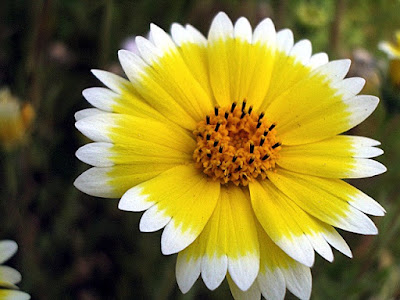
Tidy Tips: photo by Cliff Hutson


Flannel Bush: photo by Cliff Hutson


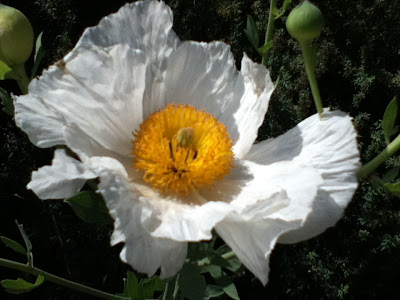
Matilija Poppy: photo by Cliff Hutson


Shaw's Agave: photo by Cliff Hutson


Sticky Monkey Flower: photo by Cliff Hutson


Monday, April 10, 2023

Spring Flowers

 What's Blooming?


Random photos of what has come in to bloom on my patio and in my yard.


All that rain was pretty helpful. 


Note: All photos are my own work (© Cliff Hutson). I dispensed with captions as I thought they would not be useful.


Monday, December 19, 2022

Sun Camellia (Trois est une foule)

Trois fleurs dans le jardin:


Trois est une foule: photographie de Cliff Hutson
Trois est une foule: photographie de Cliff Hutson


Monday, December 12, 2022

December is Bustin' Out All Over?

 A few plants in bloom:


Vigne en fleurs: photo by Cliff Hutson


December may not be as big a month as June, but there is still quite a bit going on in our little part of the world.  


Soleil Camélia (Numéro 1): photo by Cliff Hutson


Pensée en fleurs: photo by Cliff Hutson


Fleur de cosmos : photographie de Cliff Hutson


But, it is Autumn after all:


Feuilles d'automne : photographie de Cliff Hutson


Monday, October 31, 2022

Day of the Dead

Día de los Muertos


Skull: photo by Cliff Hutson


October 31is the eve of Día de los Muertos also known as "Day of the Dead". I did a post on the multi-day festival a couple of years ago. I humbly refer you to it here.

I would also like to bring to your attention nice spread done on this year's Day of the Dead Parade and celebration in downtown Austin by Kirk Tuck, a professional photographer.


Halloween


Halloween (2006): photo by Cliff Hutson


Today of course is also Halloween, which is my least favorite holiday.  Perhaps that is due to my late wife insisting that everybody in the house wear a costume to greet the children (and some adults) who came to our door for treats.

See photo above.


Monday, October 3, 2022

Apache Plume

Apache Plume

Apache Plume Fruit: photo by Cliff Hutson


Some years ago, I wrote a column called "Plant of the Month" for Oaks Notes the newsletter for the volunteers at Rancho Santa Ana Botanic Garden (now the California Botanic Garden). One of the pleasures I derived from writing those articles was that my research deepened my knowledge of the plants I picked for the column. Once, I was almost too ashamed to admit that I found out that what, for decades, I have taken to be the flower of Apache Plume was actually its fruit.

Apache Plume (Fallugia paradoxa) belongs to ROSACEAE, the rose family. It is native to the arid habitats of the mountains of east San Bernardino County. It is also found in the desert woodlands and scrub of Nevada, Utah, Arizona, Colorado, Texas, and northern Mexico. It is the only member of its genus. Which is to say it is monotypic. 

Apache Plume Flower: photo by Cliff Hutson


The flower of the shrub is roselike, or to some a little like an apple blossom, with rounded white petals and a center filled with many thready stamens and pistils. The flowers are small, but not inconspicuous if one really looks at the bush when preparing to write about it.

However, the persistent fruits have distinctive feathery plumes that look a lot like pompoms. They are formed when the ovary of the flower remains after the petals fall away, leaving the styles, each 3 to 5 centimeters long. Each style is attached to a fruit, which is a small achene. The plant is covered with these clusters. They are greenish at first, turning pink or reddish tinged later on.


Eventually the plumes turn white and when backlit are quite spectacular. The fruit finally disperses when wind catches the styles and blows them away.


Apache Plume: photo by Cliff Hutson


The plant grows three to eight feet tall, with straw-colored branches and spreads six to eight feet. The small leaves are green on top and rusty underneath. Apache Plume can look a little scruffy, but still be attractive in a drought tolerant garden.


Monday, June 27, 2022

Orange Blossom Special

 A Special Day


Orange Blossoms: photo by Cliff Hutson


National Orange Blossom Day is celebrated annually on June 27.  It would seem to go without saying that orange blossoms are the fragrant flower of the orange tree (Citrus sinensis).  These blossoms have been traditionally associated with good fortune and long been popular in bridal bouquets and head wreaths. But, there are others.

Fresh bitter orange (Citrus aurantium)  blossoms are often distilled for their essential oils to make perfume. However, the process also creates a by-product widely used in Middle Eastern, North African, and European cooking: orange blossom water, or orange flower water. The water is pleasantly bitter, like orange peel, but intensely aromatic, and it is thus often used sparingly. While occasionally used in savory dishes, it's more frequently used in sweets such as baklava, the Lebanese rice pudding riz bi haleeb, Moroccan ktefa, and French madeleines and gibassier. The flowers are also used to brew tea.

Finally, I can't read about orange blossoms without thinking of Johnny Cash.


Monday, June 13, 2022

Nature Notes: Datura

 Toloache

A plant of many names.
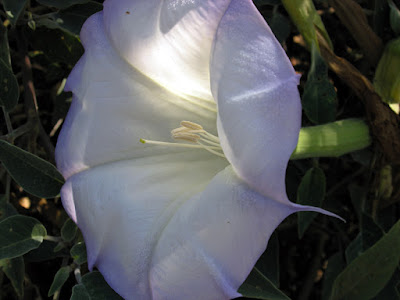

Toloache: photo by Cliff Hutson

Datura wrightii


Datura, the name I first learned, is a member of the Nightshade family (Solanaceae) and is not uncommon from Central California to northern Mexico and east across the Southwest to Texas. It is, in fact fairly common in the foothills north of my home. So you may imagine my surprise that two of my field guides: "Introduction to California Chaparral" and "Introduction to the Plant Life of Southern California: Coast to Foothills" fail to mention it.

Perhaps this is due to the plant’s seedy reputation. Easily recognized by its trumpet-shaped flowers , it has been used for hundreds of years for its hallucinogenic properties. However, it is as toxic as it is narcotic and has been responsible for the deaths of some seeking to use it for its traditional religious purposes; or more likely, recreation.

Like many Americans of my generation, I first learned of the properties of Datura, also called Jimsonweed, through reading Carlos Castaneda’s "The Teachings of Don Juan". His purported experiences led many to go out and try it for themselves. Surprisingly, I never did.

I say surprisingly as I have gone through what I called a Euell Gibbons phase and have an abiding interest in ethnobotany, as evidenced by my work at Rancho Santa Ana Botanic Garden. These pursuits have led me to consume more than a few native plants of California. But, I have a healthy respect for for things that might kill me if I do not know what I am doing and figure to give Datura a permanent pass.

The book "California Indians and Their Environment: An Introduction" by Kent G. Lightfoot and Otis Parish has a few interesting entries on what they call Toloache. They describe religious uses, such as gaining the ability to transcend reality, and medicinal purposes. Some groups prepared it in a drink as a painkiller and a treatment for a variety of ailments.

Speaking of names, the "National Audubon Society Field Guide to North American Wildflowers" refers to the plant as Southwestern Thorn Apple. It says that the common name Jimsonweed is a corruption of Jamestown Weed. The story goes that it got the name when many soldiers sent to quell Bacon’s rebellion in 1676 were poisoned by it.

Jimsonweed


Jimsonweed: photo by Cliff Hutson

By the way, the flower is typically white (see above), but  may be some times tinged with violet, as shown in the lead photograph.


Monday, May 30, 2022

Potager Garden

A French Kitchen Garden


Radish: photo by Cliff Hutson

The French kitchen garden or potager, has mixed vegetables, fruits, flowers, and herbs dates back to medieval times. It is, at heart, basically an ornamental vegetable garden that is productive yet ornamental. Often flowers (edible and non-edible) and herbs are planted with the vegetables to enhance the beauty. The goal is to make the function of providing food aesthetically pleasing.

Plant What You'll Eat

A potager should be designed to bring beauty into the utilitarian food garden, so start by planting what you like to eat and cook.

These are some of the plants that we have used over the years:

Radishes

Garden Fresh: photo by Cliff Hutson


Radishes come in numerous varieties, varying in size, flavor, and color. They can be eaten fresh, roasted, sautéd, or pickled.

Basil

Basil: photo by Cliff Hutson

Basil is a fragrant herb that tastes great in many dishes—especially homemade pesto. 


Chile de Arbol Peppers


Chile de Arbol Peppers: photo by Cliff Hutson

Chile de Árbol means "tree chili" in Spanish, a name which refers to the woody stem of the pepper. They are small and thin Mexican peppers, growing to 2-3 inches long and less than a ½ inch wide. When they mature to a bright, vibrant red, they are ready to be used.

Chives


Chives in Flower: photo by Cliff Hutson


A perennial plant that is a small relative of the onion. The leaves and flowers are both edible. 

Eggplant 


Eggplant Basket: photo by Cliff Hutson


An annual vegetable, few vegetable plants are handsomer than eggplant. My favorite way to consume the fruit is Eggplant Parmesan.


Parsley

Bolted Parsley: photo by Cliff Hutson


Parsley is a popular herb often used in American, European, and Middle Eastern cooking. Not really all that attractive when it flowers, the leaves of many varieties can be quite ornamental as well as tasty.  Use them to elevate the flavor of dishes like soups, salads, and fish recipes.

Squash


Summer Squash: photo by Cliff Hutson


This edible annual comes in two forms:  Summer squash which is picked and cooked in an immature stage such as scalloped white squash, yellow crookneck, and zucchini. And, winter squash which have hard rinds. We prefer the former. 


Tomatoes

Tomatoes: photo by Cliff Hutson


The tomato is a gift to Europe from the "New World" as a part of the Columbian Exchange . (The Eastern Hemisphere got tomatoes, chili peppers, cacao, peanuts, and corn. The people living in the Americas got smallpox, measles, typhus, and cholera. But, that is another post.)

It is difficult for some of us to think of life without tomatoes. They may be the most widely grown garden plants edible or otherwise. As my Aunt Dagmar was won't to say, "There are only two things that money can't buy. One is true love. The other is homegrown tomatoes."


Tomato Flower: photo by Cliff Hutson