Showing posts with label botanic. Show all posts

Monday, December 25, 2023

My Best Shot of 2023

 Not too shabby:


Tuesday Afternoon: photo by Cliff Hutson


Some say that December is a good time to reflect back on what happened before the year slips away. However, I feel that the beginning of the month is too early to start publishing "best of" lists. Who knows what may still lie ahead? Still, when I saw that Flickr was asking for "Your Best Shot 2023" I went ahead and submitted the above photo. It was taken in June, but odds are I will not do much better before the end of this year.

I like it for a couple of reasons. One is that I planted the seed(s) from which the plant grew. The other is that I took photos over the course of several days, and times of day, until I made the image I wanted. Thus, the title "Tuesday Afternoon." 

Looking forward to 2024, I am thinking of doing more work with my iPhone SE, or may be taking up another Photo a Day project. There will be photos in any event. See you in the new year.


Monday, April 17, 2023

California Native Plant Week - 2023

Celebrating Eight Days a Week


California Poppy: photo by Cliff Hutson


This year, California Native Plant Week runs from April 15 thorough April 22 (Earth Day).  The state is one of the most biodiverse regions on the planet with more than 6,000 types of plants. I thought that I would share some photos of some of my favorites (in no particular order). 


Five Spot: photo by Cliff Hutson


California Bay: photo by Cliff Hutson


Datura: photo by Cliff Hutson


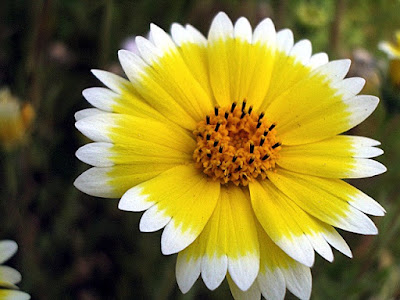
Tidy Tips: photo by Cliff Hutson


Flannel Bush: photo by Cliff Hutson


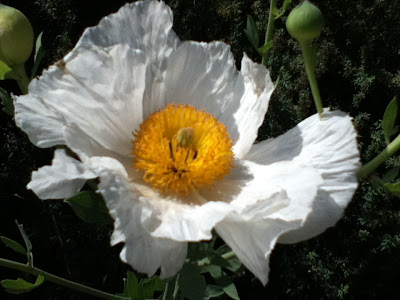
Matilija Poppy: photo by Cliff Hutson


Shaw's Agave: photo by Cliff Hutson


Sticky Monkey Flower: photo by Cliff Hutson


Monday, August 29, 2022

Lizard Tail

 Lizard Tail

Lizard Tail: photo by Cliff Hutson
Lizard  Tail: photo by Cliff Hutson


Lizard Tail (Anemopsis californica) is also known as Yerba Mansa. Yerba, is Spanish for herb. Some say that mansa is the feminine form of the Spanish word manso meaning tame, tranquil or calm. But, as the plant has none of these effects, the best translation is probably “soft herb”. The common name Lizard Tail derives from its family name  - Saururaceae. It is the only member of that family native to California.

What looks like a flower is actually a succession of bracts which sit below a petal-less flower with six stamens and an inconspicuous pistil. 

The plant flourishes in very wet soil or shallow water. Thus, today, it is much used as an excellent plant for water features in home landscaping. It can be planted in the water or along moist edges and will trail down along rock faces or fountain edges. 

However, it may be said that it better known for its medicinal uses.  Native peoples from the coastal Chumash to the desert Shoshone have used yerba mansa as an anesthetic and antiseptic for a very long time. Its dried roots, ground into a powder, are used to relieve sore throats Yerba mansa is used as an antimicrobial, an antibacterial, and to treat vaginal candidiasis. It has been used to treat colds, coughs, asthma, kidney problems, and venereal disease.


NOTE: This post is an examination of traditional medicinal use of a plant. It is intended for cultural and environmental education purposes only, and should not be taken as medical advice.


Monday, April 18, 2022

California Native Plant Week - 2022

 California Native Plant Week


California Poppy: photo by Cliff Hutson


California Native Plant Week began last Saturday, April 16, and will run through April 23rd. 

California is the most biologically and geographically diverse state in the United States. This makes for a large and diverse native flora. Southern California, the region that I am most familiar with, encompasses about 2,200 species of native vascular plants. (I have written about a few.) That is about half the flora occurring anywhere in the state, just to you some idea of what nature has in store.

No matter where you are,  check out what the California Native Plant Society is offering in celebration of this week. 


Five Spot: photo by Cliff Hutson


Earth Day


Earth Day is this coming Friday, April 22.  I would recommend observing it by going out and looking for native plants. But, here are some other suggested activities.

Monday, November 30, 2020

Dodder

California Dodder

One of the sites I referred to when preparing to write about a plant I encountered in my rambles is maintained by the Consortium of California Herbaria  which provides information about California vascular plant specimens that are housed in participant herbaria. One can search on just about any plant and obtain a list of accessions from around the state.

California Dodder (Cuscuta californica), hits close to home as it has records dating from 1897 to 2009 for specimens found in and around Claremont. One was collected from the Bernard Field Station. The other was found along Thompson Creek, where Holly and I often passed by the plant on our walks.

California Dodder: photo by Cliff Hutson

Cuscuta californica, also called Chaparral Dodder, is an annual parasitic herb or vine that is native to California. It is also found outside of California, but is confined to western North America. Dodder is readily identified by its threadlike, hairless, yellow, orange, or red shoots which twine around host plants eventually creating a tangled mat. One notable feature is that it does not usually have roots that reach the ground. Instead, knoblike organs along the shoot (haustoria) penetrate the host stem. Shoots either lack leaves or have very tiny red, yellow, or orange scalelike leaves pressed close to the stem. It tends to bloom from May through October. The white flowers are tiny, only about 3 to 6 millimeters wide. The fruits are even smaller.

Dodder once had its own family, but it is now consigned to CONVOLVULACEAE, the Morning Glory Family. The epithet Cuscuta seemingly comes from Cuscu'ta a name of Arabic derivation meaning "dodder”. The common name, Chaparral Dodder, tips us to one of its habitats. It is also found through out the state in many other plant communities such as forests and grasslands. And, of course, “the City of Trees and PhDs”.

Sunday, April 19, 2020

California Native Plant Week #9

A 9 Day Week


"Eight days a week
Is not enough to show I care"

- The Beatles

An eight day week was not enough for The Beatles, and apparently not for California Native Plant Week as well. So, here we are with my last plant for this year.

x Chiranthofremontia lenzii


x Chiranthofremontia lenzii: photo by Cliff Hutson

X Chiranthofremontia lenzii (hybrid monkey hand tree) is a large bush that is a hybrid between Mexico's Chiranthodendron pentadactylon and California's Fremontia californicum. It has a glorious yellow/orange blooms. The distinctive flowers appear in late spring and early summer; the stamens are long, curve upward, and give the distinct impression of a clawed hand or paw.

The nothogeneric name is derived from the two generic names using "Chir- antho" (hand, anther) and "Fremont" portions of the parental generic names. The species epithet honors Dr. Lee Wayne Lenz, Director Emeritus of Rancho Santa Ana Botanic Garden, who made many native hybrids, including Fremontodendron 'California Glory,' 'Pacific Sunset,' and 'San Gabriel'.


Hybrid Monkey Hand Tree: photo by Cliff Hutson


Earth Day Again


I was in grad school when the very first Earth Day happened.  The campus was alive with the sound of music and many well attended events. Obviously, this year's 50th anniversary observance has to be very different. The Union of Concerned Scientists has planned a three-day event called Earth Day Live.

What Is Earth Day Live? Find out here.


Saturday, April 18, 2020

California Native Plant Week #8

Wildflower Meadows


Meadow with Lupins: photo by Cliff Hutson


Technically, a meadow is simply an open habitat vegetated by grasses and other non-woody plants. However, few things evoke magical memories like spring wildflowers.


Common Meadowfoam: photo by Cliff Hutson


Collinsia: photo by Cliff Hutson


Tidy Tips and Lupins:  photo by Cliff Hutson
Tidy Tips and Lupins:  photo by Cliff Hutson


Clarkia amoena: photo by Cliff Hutson


Clarkia Fan: photo by Cliff Hutson


Friday, April 17, 2020

California Native Plant Week #7

Ninebark


Ninebark: photo by Cliff Hutson

Pacific ninebark or western ninebark (Physocarpus capitatus) is a shrub that is native to California and confined to western North America—from southern Alaska east to Montana and Utah, and south to southern California—in the redwood forest, chaparral, yellow pine forest, red fir forest and wetland-riparian communities. The plant gets its common name from its bark, which may peel showing several layers

It is a deciduous bush up to 8 feet tall, with round 3-to-5-inch clusters of white flowers having five petals and numerous red-tipped stamens, flowering May through July. The blossoms have been noted as being attractive to a large number of native bees. Also, small animals and birds find shelter in its branches. The leaves are lobed, about 1.2–5.5 inches long and broad, alternate, generally serrate, and remind me of small grape or currant leaves, though some say they are maple-like. They turn intense red to orange in the fall. The fruit is an inflated glossy red pod, which turns dry and brown and then splits open to release seeds.

Many nurseries recommend the plant not only for its delightful display of flowers and its showiness in fall, but also for the sculptural attractiveness the rest of the year. It grows best in moist environments, but it is drought-tolerant to a degree.

Save the date(s)


Earth Day is April 22, but at least one organization is proposing a week's worth of activities. 


Thursday, April 16, 2020

California Native Plant Week #6

Joshua Tree


Joshua Tree Forest: photo by Cliff Hutson

While I am hesitant to once again write about a plant and perhaps draw too much attention to one of our over-pressured national parks, this tree is one of California's most iconic species.  

The park is named for the Joshua trees (Yucca brevifolia) native to the Mojave Desert, but it does occur outside those boundaries. And, sadly, some say that in the not too distant future it may no longer grow there.  

California Native Plant Week Takes a Different Turn This Year


A thoughtful essay from CNPS:  Native plants can offer hope, fun, and healthy distraction during stay-at-home orders.

Another way to connect with nature:  Birds


"Millions of people who aren’t frontline workers in the COVID-19 pandemic are adjusting to a new routine that means staying home — or close to it. Many are seeking solace outside."


But, wait, there's more!


There are plenty of other fun activities easy to enjoy while maintaining safe social distancing.

Wednesday, April 15, 2020

California Native Plant Week #5

Gilia tricolor (Bird's-eye gilia)


Bird's-eye gilia: photo by Cliff Hutson

Gilia tricolor, a dicot, is an annual herb that is native to California, and is endemic (limited) to California.  Blue stamens encircle the yellow throat of the flower, which is set off by a dark purple ring. All this color provides a vibrant signal to the bees that pollinate this plant.


Citizen Science Month: April 2020


Life in the time of Corona has placed many, if not most, of us under quarantine, lockdown, or "safer at home". Keeping occupied is said to be good for our mental health. One way to that is to participate in citizen science programs. Check out this site  or Science Friday to see if that might be a fit for you.


Tuesday, April 14, 2020

California Native Plant Week #4

Dogwood


Dogwood: photo by Cliff Hutson

Our native Dogwood (Cornus sericea, syn. C. stolonifera, Swida sericea) is a shrub found throughout northern and western North America; and beyond. Common  names include Redtwig Dogwood, Red-rood, American Dogwood, and (subsp. occidentalis) Western Dogwood.


Cornus sericea Berries: photo by Cliff Hutson

Monday, April 13, 2020

Wednesday, March 20, 2019

Down Time

Sick Leave


I have been dealing with a spot of illness, so rather than try to deal with a new topic I am running a post from five years ago this week. And, now back to that bowl of chicken noodle soup.

"The Cover of 'Rolling Stone''


Doctor Hook and the Medicine Show sang:

“But the thrill we've never known
Is the thrill that'll getcha
When you get your picture
On the cover of the Rolling Stone.”

That is a thrill that will not likely ever be mine as well. But, a photograph I shot has made the cover of a magazine.

The Los Angeles County Arboretum and Botanic Garden chose my Tidy Tips photo for the cover of their magazine, 'Exploring the Arboretum'.

Exploring the Arborretum
Wildflowering LA

It illustrates the article "Wildflowering LA". I have to say I think that is pretty cool. 

The kicker is that there is also an article on Julius Shulman. This is an added plus for me. He was a photographer whose work I have admired for decades. Little could I have dreamed when I was in my teens that something I shot would ever appear in such close proximity to his photographs.

I am not in his league, but, I too, have made forays into architectural photography. This is my latest attempt:

A back room at Walter's Restaurant in Claremont.
A Bar at Walter's

Earlier work about the Schindler House can be found on PBase.

Wednesday, September 5, 2018

Wednesday, April 18, 2018

Shaw's Agave

One of my favorite books from my younger days has a poem with the line, “All that is gold does not glitter”. I would turn that around for Coastal, or Shaw’s, Agave and say, all that is drab is not as dull as it seems. Sometimes one just has to wander around until they see things in the proper light.

Coastal agave, i.e., Agave shawii is a succulent with closely spaced, overlapping sword-shaped leaves that measure up to 8 inches wide and about 18 inches long. They diverge from the center of the plant in a spiral making for a rounded shape. The deep green leaves are edged with spines.

These spines nominally appear as brown or gray and don't offer much in the way of a visual display. However, in early morning or late afternoon, when the the sunlight comes in from behind the plant, they light up and glow red and/or orange, rivaling any neon sign on the Las Vegas Strip. 

Coastal Agave
Shaw's Agave by Cliff Hutson

The leaves are also notable for bearing the imprint of the spines of the leaves that were in front and back of them when they were clasped together. I find this to be a charming visual element to the plant.

The flowering plant is also attractive. It may take 20 to 40 years before it flowers. But, then yellow blooms, looking much like  a hand of very small bananas, burst out on the top of an 8 to 12 foot stalk resembling an asparagus spear. The flowers attract hummingbirds, bats and bees. When a single plant flowers it dies, but its “pups” or clones will live on.

Bats are a key pollinator of this agave and probably the primary reason for the tallness of the flowering stalk. Bats, save for the few species of vampire bats, can not launch into flight by flapping their wings. they, instead, take off by dropping from a height be it the roof of a cave, bridge, or tall plant with sturdy flowers.


Coastal Agave is found in Baja California. Also native to California, it occurs naturally only in San Diego County, near Border Field State Park. Most of the plants that were there were bulldozed into oblivion by your government while building the boundary wall between the USA and Mexico. However, a few seem to have survived. Other populations exist elsewhere in Southern California, but they were probably planted out in an effort to preserve the plant. I, for one, certainly hope it stays with us.

Wednesday, March 21, 2018

Spring Has Sprung

One of My Favorite Flowers


The calendar says that it is Spring. But, the weather says that it is "late Winter".  One of my favorite California native plants has been showing for a couple of weeks, as it can go either way.

As a naturalist, I like to have a theme in mind when I lead an interpretive walk. I see this as a means of engaging the audience’s interest, as opposed to just wandering around identifying plants until their eyes start to glaze over. One of the themes I use is “does the common name of this plant make sense”.  A favorite plant for this discussion is the Fairy Duster, Calliandra eriophylla. It takes little imagination to see that the fluffy pink blossoms do resemble feather dusters scaled down to fairy size, assuming we are thinking of Tinker Bell instead of Titania.


The flowers appear between late winter and late spring. They have dense clusters of pale to deep pink stamens and are about two inches wide. I think that they are quite attractive; and, in fact, Calliandra is derived from the Greek kallos, "beautiful," and andra, "stamen”. The leaves are also interesting being twice pinnately compound with each division bearing five to ten pairs of leaflets.

The plant, also known as False Mesquite, is a densely branched shrub, about two feet tall and twice as wide, native to western North America. A member of the Pea Family (Fabaceae), it belongs to a group of primarily tropical plants that include Acacias and Mimosas. However, Fairy Duster grows in sandy washes and on slopes in the arid desert and grasslands of California, Arizona, New Mexico and Texas; and Mexico.

But, to say it occurs in California is a bit misleading as it is found only in the Creosote Brush Scrub community and then seemingly limited to Imperial and San Diego Counties. Due to this geographic circumscription , it is included in the California Native Plant Society Inventory of Rare and Endangered Plants on list 2.3 (rare, threatened, or endangered in California; common elsewhere). In the interest of full disclosure, I would like to point out that one specimen was collected by Dr. Robert F. Thorne (of RSABG) on April 12, 1964, in Riverside County and that there is also a questionable 1881 accession from Kern County. I, myself, first encountered Fairy Duster while hiking in Riverside County. It was on land that was starting to be developed somewhere outside of Palm Springs, so it may not have been a natural occurrence.

Wherever we find it, I think it offers people an opportunity to ask people to look more carefully at nature and by observing this one flower they might go to focus on other aspects of nature rather than passively walk though it.

Saturday, March 22, 2014

"The Cover of 'Rolling Stone''

Doctor Hook and the Medicine Show sang:

“But the thrill we've never known
Is the thrill that'll getcha
When you get your picture
On the cover of the Rolling Stone.”

That is a thrill that will not likely ever be mine as well. But, a photograph I shot has made the cover of a magazine.

The Los Angeles County Arboretum and Botanic Garden chose my Tidy Tips photo for the cover of their magazine, 'Exploring the Arboretum'.

Exploring the Arborretum
Wildflowering LA

It illustrates the article "Wildflowering LA". I have to say I think that is pretty cool. 

The kicker is that there is also an article on Julius Shulman. This is an added plus for me. He was a photographer whose work I have admired for decades. Little could I have dreamed when I was in my teens that something I shot would ever appear in such close proximity to his photographs.

I am not in his league, but, I too, have made forays into architectural photography. This is my latest attempt:

A back room at Walter's Restaurant in Claremont.
A Bar at Walter's

Earlier work about the Schindler House can be found on PBase.