Showing posts with label COVID-19. Show all posts

Monday, July 18, 2022

World Listening Day

“Listening Across Boundaries”


Today, July 18, is World Listening Day. It is hosted every year by the World Listening Project, a nonprofit organization that is “devoted to understanding the world and its natural environment, societies, and cultures through the practice of listening and field recording.” 

The theme for 2022  is “Listening Across Boundaries”.  The purpose is to explore the role of listening across various branches of knowledge; how natural soundscapes do not recognize human-drawn boundaries; and seeming limitations or barriers to listening that can be overcome.

July 18 was chosen because it is the birthday of the composer R. Murray Schafer, one of the founders of the Acoustic Ecology movement.


Acoustic Ecology 


Radio Expeditions: photo by Cliff Hutson


This article in Physics Today is a good introduction to acoustic ecology, “a field that examines how animals, including humans, use information obtained from the environment [mediated through sound] in different aspects of their lives.”


Soundscapes


Headphones: photo by Cliff Hutson


A common definition of soundscape is the it is a mélange of musical and sometimes nonmusical sounds. However, wherever you are, you are surrounded by a soundscape. Very similar to how a landscape depicts a view of the land in front of you, a soundscape captures the audio of all the sounds around you. 

Soundscape ecology, of course, affects not only humans but also the other beings that live amongst us. A notable aspect of the shutdowns due to the COVID pandemic was that birds changed their tunes. 


Soundwalk


Soundwalk: photo by Cliff Hutson


One way that most of us might be able to observe World Listening day is to take a soundwalk - a walk with a focus on listening to the environment, no matter where we are. 


Monday, January 10, 2022

Looking Back: At the Movies (2021)


Mini on Sofa: photo by Cliff Hutson


No so many: 

My cat and I watched 59 movies, via streaming and DVD, in 2021. This was far fewer than the year before. As a trained statistician, I know that one should not construe causation from correlation however I can not help but think that the wearing effect of the pandemic has an impact on the type of media I wish to consume. I seem to have switched from film, which requires some commitment and perhaps thought, to television. More about that at another post.

Movies Watched in 2021

  1. Hell or High Water
  2. Pirates of the Caribbean: On Stranger Tides
  3. Congo
  4. The Maltese Falcon
  5. Blood Diamond
  6. Santa  Fe Trail (1940)
  7. They Died With Their Boots On
  8. Night at the Museum: Battle of the Smithsonian 
  9. Poseidon Rex
  10. Custer of the West
  11. Little Big Man
  12. One Night in Miami
  13. Tremors 
  14. Croc
  15. The Dinosaur Project
  16. Barton Fink
  17. King Kong (1976)
  18. Groundhog Day
  19. Relic
  20. The Big Lebowski
  21. No Country For Old Men 
  22. A Serious Man
  23. Indianan Jones and the Raiders of the Lost Ark
  24. The Milagro Beanfield War
  25. Indiana Jones and the Last Crusade 
  26. Harold and Kumar Go to White Castle
  27. Double Indemnity (1944)
  28. Sunset Boulevard 
  29. The Apartment
  30. Jaws
  31. Miss Fisher and the Crypt of Tears
  32. Ten Little Indians (1989)
  33. Mad Max
  34. Invasion of the Body Snatchers (1956)
  35. Invasion of the Body Snatchers (1978)
  36. Lake Placid: The Final Chapter
  37. Monster from the Ocean Floor (1954)
  38. 2001: A Space Odyssey 
  39. Universe 
  40. Ghostbusters (2016)
  41. Joe Kidd
  42. Ghostbusters (1984)
  43. The Matrix
  44. Frankenfish 
  45. Sucker Punch (2011)
  46. Dark Alibi
  47. Alien
  48. Arrival
  49. The Legend of Zorro
  50. Blade Runner 2049
  51. Outlander
  52. Painted Desert
  53. The Fog
  54. Deepstar Six
  55. The Life Aquatic with Steve Zissou
  56. The Tomorrow War
  57. The Marksman 
  58. Finch
  59. Runaway Train (1985)
The list runs heavily to Westerns, which may be my favorite genre, followed by film noir, and science fiction. 


The Good

There were more than a few good films this year. Among them are classics such as Double Indemnity (1944) and Sunset Boulevard, both noir, which I watched as part of a film group organized by the Skirball Cultural Center which focused on the films of Billy Wilder. The year's best Western was Hell or High Water. The film group also devoted time to science fiction. My favorite among those films was Blade Runner, which seriously borrows from film noir. I feel that I would be remiss if I did not mention the movie Finch. While it seems that many do not like it, I feel that it did what it was intended to do - (spoiler alert) make me cry. And, I enjoyed watching the "personal growth" of the robot, Jeff.

The Bad

Oddly enough, I find it somewhat difficult to pick one from this list that is just merely bad. But, I have to do so in order to keep with my trope. Therefore, I am going to nominate Croc.

The Ugly

The winner (?) in this category is clearly Lake Placid: The Final Chapter.  By the way, I enjoyed the first "Lake Placid" whose cast included the late, great Betty White.

That's a wrap movie wise for 2021. I wonder what the coming year holds for me. Will I see more or less? I have watched just one so far.

Monday, December 20, 2021

Life in the Time of Corona: Travel Rules

 Planes, Trains, or Automobiles?


Union Station: photo by Cliff Hutson

It is clear that COVID-19, and its variants,  has disrupted travel plans for two and a half years.  Many of us are reluctant to travel at all. Those who do are subject to a lot of rules and regulations.

Is the omicron variant making you rethink your holiday plans? 

I am one of those staying at home. But, that does not stop my mind from from wandering and Tim Cahill's rules for traveling come to mind. Cahill is, for my money, one of the best of the travel/adventure writers of all time. Years ago, he came up with a list of rules to follow when traveling that I have enjoyed returning to time and again. So, at the risk of copyright violation, I am going to include his list (with my annotations) in this blog.
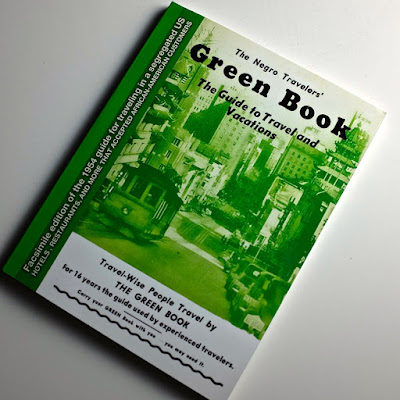

The Green Book: photo by Cliff Hutson


Tim Cahill - A Travel Pro's Advice:

Rule 1: Avoid psychotic travel companions. Here's the nightmare: It's two in the morning. You are sitting around the campfire speaking slowly, with exaggerated calm, enunciating each word very, very carefully. You are saying, "Give me the gun, Laszlo. Give me the gun, Laszlo. Give me the gun, Laszlo."


Rule 1, corollary 1: The most carefully chosen travel companions become the most psychotic.


Rule 1, corollary 2: Psychosis is contagious.


Rule 2: Have a quest. The quest is the most significant and consequential of all travel plans. What you really want to do is meet indigenous folks, understand their concerns, find out how things work, make friends. You don't do this in the company of traveling English-speakers. So have a quest, some bit of business that will shove you into the cultural maelstrom. Perhaps you have distant relatives in the country. Look them up. That's your quest. It will force you to use the phone book (people in Iceland, you'll note, are listed by their first rather than last names) and to arrange transportation to an area of the country that is not likely a tourist destination. Perhaps you're interested in trains, or motorcycle clubs, or ecological issues. Find locals who share your passion. You'll make friends. 


Rule 3: Exercise ordinary caution. Never, never, never put a marshmallow in your mouth and try to feed it to a bear. 


Rule 4: You are the protagonist. There is a variety of travel book currently in vogue. The writer, a man or woman broken by a bad relationship, sets off on a journey designed to heal the soul. By the end of the book, the formerly tortured scribe is figuratively knocking back margaritas in an orgy of cleansing regeneration. 

Used to be, we sent mythical or fictional characters on such journeys. Gilgamesh searching for the answer to death; Odysseus on a ten-year voyage of discovery; Dante and Orpheus in hell; Huck Finn on the Mississippi. These days, we tend to be more democratic in our mythology. You get to be the driving force. Make your myth a good one. 


Rule 5: Boredom greases the cogs in the machinery of marvels. In The Immense Journey, the anthropologist and naturalist Loren Eiseley says, "It is a commonplace of all religious thought, even the most primitive, that the man seeking visions and insight must go apart from his fellows and live for a time in the wilderness. If he is of the proper sort, he will return with a message. It may not be a message from the god he set out to seek, but even if he has failed in that particular, he will have had a vision or seen a marvel, and these are always worth listening to and thinking about."


What Eiseley doesn't say is that, on your quest for marvels and insights, you will be bored. Oh, God, will you be bored. The three days waiting for an Indonesian bureaucrat to issue you a travel permit; the rock slide in Costa Rica that caused a 23-hour traffic jam; the five-day wait for the Congo River passenger barge; the eight sweaty hours spent in the transit lounge of the Bujumbura airport, waiting for crews to clean up the wreckage of the last plane that tried to land in Kigali. Boring. 

Bring along a big book. This is your chance to finally finish War and Peace. And remember--while you're plowing through Andrey's interminable conversations with Karatayev–that boredom is often the price we pay for marvels. 


Rule 6: Stop whining. If you're cold and wet, it's a good bet that everyone else in your party is too. Why should they listen to you talk about what they already know? Travel is boring enough as it is. 


Rule 6, corollary 1: This can't be stressed strongly enough: No one wants to hear about your last bowel movement. 


Rule 7: Read guidebooks. Guidebooks, books on the country, and books by local authors can all help you refine the nature of your quest. 


Rule 7, corollary 1: Expect the books to be wrong or out of date. 


Rule 8: It ain't about money. There are guidebooks for backpackers and budget travelers that say that in most Third World countries, there's a three-tiered price system. The first price is for stupid rich outsiders. The second is for citizens who are not local. And the third is for locals. Strive, the books tell you, for the third price. This, they say, will increase your interpersonal skills and tell you much about the country. 

OK, true enough. There are places where you are expected to bargain and sharpies who want to take advantage of you. Unfortunately, too many people who think of themselves as "world travelers" become obsessed with money. It's loathsome to see some young trekker arguing for an hour with an elderly woman over a 15-cent charge for an afternoon of washing clothes.


Too often money, and the process of saving money, becomes the entire point of traveling. If the nature of your quest is financial, stay home and get into arbitrage. 


Rule 8, corollary 1: Similarly, don't listen to fellow travelers who espouse this philosophy. "Don't spoil the natives," is the way it is often put. Screw these people. Spend what you need to in order to accomplish your quest. 


Rule 8, corollary 2: Thinking of your hosts as "natives" who can be "spoiled" dehumanizes people and creates the kind of abyss that is impossible to bridge with friendship. 


Rule 9: Don't worry too much about gear. Unless you're going to climb a mountain or scuba dive on your own, bringing too much of your own equipment can be a problem. Do people live where you're going? Have they lived there for centuries? For a millennium? Maybe they know something about survival in the place where they live. Why spend three days trying to find a machete in Denver when you can buy a better one for a quarter of the price in Honduras? 


My own kit is fairly standard: Diarrhea medicine, a dry pad to sit on, hot sauce for bland meals, dental floss to use as sewing thread, a Leatherman tool, something to read, and duct tape, which the Bambenjele pygmies of the northern Congo told me represents the high point of my culture. 


Rule 10: Don't follow rules. This is probably the most important rule. 


Rule 11: Try the local foods. Eat what is put in front of you. They are not making fun of you. The rooster's head floating in the soup really is given to the honored guest. It is impolite not to eat it. If you're a picky eater, stay home. 


Rule 11, corollary 1: Take the usual precautions, but expect to get sick anyway. 


Rule 11, corollary 2: See Rule 6, corollary 1. 


Rule 12: Learn the rudiments of the local language. It's important to be able to say, "I'm sorry, excuse me, I didn't know, I'm not from around here, where's the bathroom, thank you, how much is a beer, I beg your pardon, I'll pay for it, call a doctor, call the police, don't call the police." 


Rule 12, corollary 1: Intimate relations fuel idiomatic fluency. The colonial Dutch had a saying that holds true to this day: "The best way to learn a language is under the mosquito net." 


Rule 13: You are the foreigner, dickweed. Once, in Costa Rica, I saw an older gentleman in Bermuda shorts and black shoes upbraid a waiter who didn't understand the word "ticket," as used to mean "bill." 

"Gimme my ticket." 

"Your ticket, sir?" 

"Yeah, my ticket. What's wrong with you?" 

"I don't understand this word, 'ticket.'" 

"How old are you?" this American asked. 

"I have 29 years, sir." 

"Well, goddamn it," the man said, "you're old enough to know English by now." 

This is why people burn flags. 


Rule 14: The "natives" have their pride. One thing an American traveler hears quite often is, "You Americans have a great nation, and much power, but we (Peruvians, Mongolians, Egyptians, Congolese, Bolivians, Turks) have the great soul." Don't argue with these folks, Miles Davis and Smokey Robinson notwithstanding. Instead, inquire about the nature of the national soul. You could learn something. 


Rule 15: Schedule a rest day every now and then. Contrary to what you read, sudden insights seldom happen at the summit of a mountain, at the moment the whale is sighted, or in the face of some overwhelming bit of landscape. You haven't yet assimilated the experience. Look for epiphanies on those days when you're lying on your back, watching the ceiling fan push dust motes through a shaft of light falling through a grimy window. Exhaustion seldom engenders insight. 


Rule 16: Don't drink too much in a little basement bar just off a street called Florida in Buenos Aires... Because you'll find yourself involuntarily surrounded by coperas, or what we would call B-girls, and three bartenders will all be opening bottles of "champagne" that you didn't order and that cost $60 apiece, and you'll have to fight your way up the stairs to the exit, throwing money at the bouncers, and the coperas will run out into the street and yell maricón at you as you stagger away, thinking, "Geez, I thought they liked me." 


Rule 17: Don't become involved with your guide. This is often a cause of heartbreak. Worse, there are situations in which the affair works out. Then you end up married to a guide. 


Rule 18: Wait until the last possible moment to punch out disagreeable traveling companions. It's best not to punch out traveling companions during the first two-thirds of a trip. The person may possess skills that could come in handy. It's best to swallow insults, listen to complaints, and nod sympathetically at the vivid description of the last bowel movement. Then, at the moment of greatest annoyance, simply recall your resolve to deck this bozo with a sucker punch. Don't do it, just think about it. In practice, you'll find the idea of a physical comeuppance soothing. And by the end of the trip, you may even find you've developed a grudging respect for the person. You may actually have become friends. But let's say it's time for the last good-bye, and you still think the person would benefit from a physical explanation of his various failings. Don't throw that punch. Think instead about how happy you're going to be when you've seen the last of this slime weasel. The punch is a psychological device, a coping mechanism, and it lives only in your mind. 


Rule 19: Mold experience into stories as a mnemonic device. Travel is a chaos of experience, momentarily memorable and distressing in its capacity to flee the mind and disappear without a trace. Guides, professional travelers, mold the clay of experience into stories. All guides believe their stories are unforgettable. Some of them are. 


Here's a typical guide story: Two guides, whom we'll call Big Mike and Medium Mike, are in the midst of a long, boring wait in Punta Arenas, Chile. They're waiting for a freighter that will take them to Antarctica. Medium Mike is telling the story. "So the freighter is being loaded and may leave at any time. One of us has to wait for the departure call. We draw straws. I get to wait. It's Saturday night. Big Mike goes to the local house of ill repute. He's there all night. Seven o'clock the next morning I get the call. Boat's leaving in two hours. I run down to the place where Big Mike is, but the door is locked. No one answers my knock. I'm getting frantic. The windows are high off the sidewalk, so I'm on a cement block, pounding on a window, yelling for them to open up, c'mon, this is important. About this time, a group of nuns walk by on their way to mass. One of them stops and says, 'Son, couldn't you wait until after church?'" 


Rule 19, corollary 1: You don't have to be a guide to tell guide stories. 


Rule 19, corollary 2: All guide stories begin, "No shit, there I was..." 


Rule 19, corollary 3: The worse the experience, the better the story. Therefore... 


Rule 20: There are no bad experiences. 


Traveling Shoes: photo by Cliff Hutson


Note:

This article is posted on this site is for promotional purposes only. If Mr. Cahill, Outside Magazine, or affiliates want this taken down, please contact me and I'll be happy to do so as quickly as possible.


Monday, March 1, 2021

Life in the Time of Corona: Self-care

 Self-care


“You may not control all the events that happen to you, 
but you can decide not to be reduced by them.” 


Bee & Camellia: photo by Cliff Hutson


Monday, January 25, 2021

Looking Back: At the Movies (2020)

I have long been interested in exploring the narrative, artistic, cultural, economic, and political implications of le cinéma. While I can not say that it is genetic, my granddaughter (who turns thirty today) has a degree in film studies. However, mostly, I just like to be entertained. In The Before Time I watched about 85 movies a year. In the first year of the pandemic I watched 108.


Ferrari: photo by Cliff Hutson
 Ferrari: photo by Cliff Hutson


 Movies Watched in 2020

Cast Away: photo by Cliff Hutson
  1. A Thief of Time
  2. Bullitt
  3. My Cousin Vinny
  4. North by Northwest
  5. Harold & Kumar Go To White Castle
  6. A Mighty Wind
  7. Sherlock Holmes (2009)
  8. Sweet Country
  9. Jurassic Park
  10. Hell on the Border
  11. Outbreak: Anatomy of a Plague
  12. Outbreak (1995)
  13. Contagion
  14. World War Z 
  15. Ford v Ferrari
  16. The Big Sleep
  17. A Bridge Too Far
  18. The Legend of the Lone Ranger (1981)
  19. Support Your Local Gunfighter
  20. The Vikings (1958)
  21. The Last Stand
  22. The Lone Ranger (2013)
  23. Jumanji: Welcome To The Jungle
  24. Jumanji: The Next Level
  25. The Phantom (1996)
  26. Captain America: The First Avenger
  27. The Avengers (2012)
  28. The Siege
  29. Jurassic World
  30. Licence to Kill (1989)
  31. Hudson Hawk
  32. The Hobbit: An Unexpected Journey
  33. Sherlock Holmes: A Game Of Shadows
  34. Star Trek: Insurrection
  35. Terminator: Dark Fate
  36. Bad Boys
  37. Evolution (2001)
  38. The Andromeda Strain (1971)
  39. It Came from Beneath the Sea
  40. Mad Max: Fury Road
  41. Waiting for Guffman
  42. Best in Show
  43. Rouge
  44. Jaws
  45. The African Queen
  46. Humanoids from the Deep
  47. Gemini Man (2019)
  48. Twister
  49. Sideways
  50. Commando (1985)
  51. The Man Who Killed Hitler and Then the Bigfoot
  52. Apollo 13 (1995)
  53. The Producers (1967)
  54. Cast Away
  55. Atomic Blonde
  56. Shooter
  57. Predator (1987)
  58. Alien 
  59. Forgetting Sarah Marshall 
  60. Airplane!
  61. Ocean’s Eleven
  62. Back to the Future
  63. The Maltese Falcon
  64. West Bank Story
  65. The Gauntlet
  66. Dirty Harry
  67. Magnum Force
  68. The Enforcer
  69. Sudden Impact
  70. The Dead Pool
  71. Casablanca
  72. The Right Stuff
  73. Star Wars: Episode IV – A New Hope
  74. To Have and Have Not
  75. The Treasure of the Sierra Madre
  76. Silverado
  77. The Italian Job (2003)
  78. The Italian Job (1969)
  79. Wild Wild West (1999)
  80. Star Wars: Episode V – The Empire Strikes Back
  81. Lone Survivor
  82. Fargo
  83. The Blues Brothers
  84. Barbarella
  85. Romancing the Stone
  86. Bill and Ted’s Excellent Adventure
  87. Greyhound
  88. Six Days, Seven Nights
  89. Pit Stop (1969)
  90. Anacondas: The Hunt for the Blood Orchid
  91. Casino Royale (2006)
  92. Young Frankenstein
  93. Adaptation
  94. All That Jazz
  95. Alien
  96. Jiro Dreams of Sushi
  97. Independence Day
  98. Beetlejuice
  99. Hondo (1953)
  100. Borat Subsequent Moviefilm
  101. 20 Things to Do in Midsomer Before You Die
  102. On the Rocks (Apple TV+)
  103. Deadpool
  104. Silverado
  105. Raising Arizona
  106. John Wick
  107. Wolfwalkers
  108. Trading Places

Film Class: photo by Cliff Hutson

The Old and the New


A Bridge Too Far: photo by Cliff Hutson


Looking back at my list it is abundantly clear that the majority of my viewing falls in the "old" category. As I have written elsewhere there are some movies that I make it a point watch every year, mostly from my rather large DVD collection. Among these are "Casablanca", "Jaws", "Silverado", and "Trading Places."

Our current situation led me to search out films about pandemics. While there are several well known movies in this pantheon, the one I found most gripping was "Outbreak: Anatomy of a Plague".  One of the worst was "World War Z".  Some say that it was a "bona-fide box office hit", but the plot had nothing to do with the novel that it was based on and should have been given another title. 

Of the truly "new" films I found only that is truly worth mentioning, "Greyhound", a fictionalized summation of the Battle of the Atlantic,  

Note:


While I titled this post "At the Movies" (stolen from the program of the same name), all of these movies were watched in the privacy and safety of my home. This is not only due to the restrictions imposed by the prevalence of COVID-19, but also the fact that I just do not want to go to a theater. As beat as I can recall the last movie I went out to see was Sherlock Holmes (2009).


Wednesday, October 14, 2020

Life in the Time of Corona: The Election

 Making My Vote Count


I Voted: photo by Cliff Hutson


This pandemic has left many of us feeling stressed and isolated. So many of things that we took for granted we can no longer do, or do so with great trepidation.

One of the rituals I have practiced every two years was walking to my local polling place on Election Day and casting my vote. That is not going to happen for the upcoming election on November 3, it would not be prudent.  But, by dropping my "mail-in" ballot off at a drop box, I have already executed my civic duty this year.


Official Drop Box: photo by Cliff Hutson

Be well and stay safe


Voters, such as myself, who return their ballots early will help ensure safe physical distancing at voting locations. Keeping both themselves and others safe and, hopefully, well. 


Thursday, July 30, 2020

Life in the Time of Corona: Sometimes, there's a man


Bad Moon Rising: photo by Cliff Hutson

"I see a bad moon a-rising
I see trouble on the way
I see earthquakes and lightnin'
I see bad times today"

- Creedence Clearwater Revival


Sometimes, there's a man for his times.

And, sometimes, there isn't


I have just a few words to illustrate my point:
  • Person
  • Man
  • Woman
  • Camera
  • TV


A Man with a Camera: photo by Cliff Hutson


Thursday, July 9, 2020

Life in the Time of Corona

Bad Moon Rising: photo by Cliff Hutson

Times are strange


Times are strange, and, I am locked in tight and I'm out of range.  When this "shelter-in-place", "safer-at-home", or "self-quarantine" thing started so many weeks (months?) ago I did not think that it would be much of a problem.  I am very used to living alone and am very much the introvert.  However, not being able to come and go as I please has proved to more than a bit taxing.
Some people seemed to have put this time to good use.  But, I like many others trapped indoors as a deadly pandemic rages, turned to watching films that confront the practicalities and horrors involved with some sort of now all-too-familiar apocalypse. Not just those that suddenly seem timely, like the viral thriller turned convincing docudrama Contagion, but also those that cover similar global panic and ultimately togetherness in the face of natural disasters, alien invasion and other earth-shaking events.

Then it came to mind that I might enjoy something about being alone and decided to watch Cast Away, the Tom Hanks film from 2000, for the second time, in nearly twenty years. I really enjoyed it.  

One of the things that I found most intriguing was that in the film Wilson, a volleyball, serves as Chuck Noland's friend and only companion during the four years that Noland spends alone on the deserted island.     This led me to ask two questions: 1) What became of Wilson? 2) What if I had a "Wilson" of my own?  

Wilson


Wilson the Volleyball: photo by Cliff Hutson


Some say that Wilson was irretrievably lost at sea, never to be seen again. Others say that, much like Chuck Noland, he was eventually picked up by a passing ship. But, the reality is that he was an actor playing a role.

One of the original volleyball props was sold at auction for $18,500 to the ex-CEO of FedEx Office, Ken May. However, it turned out that I could have one of my own, for a whole lot less, by buying it directly from Wilson Sporting Goods. I was very disappointed that he arrived via UPS instead of FedEx.

We will have to see how our friendship develops.


Thursday, April 16, 2020

California Native Plant Week #6

Joshua Tree


Joshua Tree Forest: photo by Cliff Hutson

While I am hesitant to once again write about a plant and perhaps draw too much attention to one of our over-pressured national parks, this tree is one of California's most iconic species.  

The park is named for the Joshua trees (Yucca brevifolia) native to the Mojave Desert, but it does occur outside those boundaries. And, sadly, some say that in the not too distant future it may no longer grow there.  

California Native Plant Week Takes a Different Turn This Year


A thoughtful essay from CNPS:  Native plants can offer hope, fun, and healthy distraction during stay-at-home orders.

Another way to connect with nature:  Birds


"Millions of people who aren’t frontline workers in the COVID-19 pandemic are adjusting to a new routine that means staying home — or close to it. Many are seeking solace outside."


But, wait, there's more!


There are plenty of other fun activities easy to enjoy while maintaining safe social distancing.

Wednesday, April 15, 2020

California Native Plant Week #5

Gilia tricolor (Bird's-eye gilia)


Bird's-eye gilia: photo by Cliff Hutson

Gilia tricolor, a dicot, is an annual herb that is native to California, and is endemic (limited) to California.  Blue stamens encircle the yellow throat of the flower, which is set off by a dark purple ring. All this color provides a vibrant signal to the bees that pollinate this plant.


Citizen Science Month: April 2020


Life in the time of Corona has placed many, if not most, of us under quarantine, lockdown, or "safer at home". Keeping occupied is said to be good for our mental health. One way to that is to participate in citizen science programs. Check out this site  or Science Friday to see if that might be a fit for you.