Showing posts sorted by date for query native plants. Sort by relevance Show all posts

Monday, April 17, 2023

California Native Plant Week - 2023

Celebrating Eight Days a Week


California Poppy: photo by Cliff Hutson


This year, California Native Plant Week runs from April 15 thorough April 22 (Earth Day).  The state is one of the most biodiverse regions on the planet with more than 6,000 types of plants. I thought that I would share some photos of some of my favorites (in no particular order). 


Five Spot: photo by Cliff Hutson


California Bay: photo by Cliff Hutson


Datura: photo by Cliff Hutson


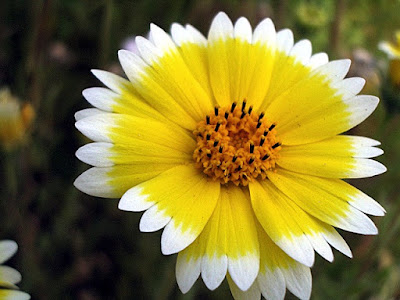
Tidy Tips: photo by Cliff Hutson


Flannel Bush: photo by Cliff Hutson


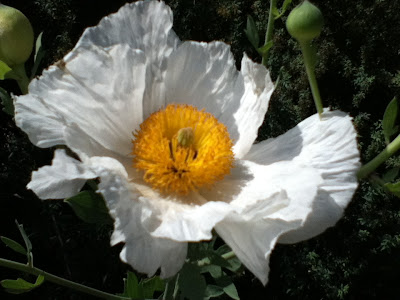
Matilija Poppy: photo by Cliff Hutson


Shaw's Agave: photo by Cliff Hutson


Sticky Monkey Flower: photo by Cliff Hutson


Monday, October 3, 2022

Apache Plume

Apache Plume

Apache Plume Fruit: photo by Cliff Hutson


Some years ago, I wrote a column called "Plant of the Month" for Oaks Notes the newsletter for the volunteers at Rancho Santa Ana Botanic Garden (now the California Botanic Garden). One of the pleasures I derived from writing those articles was that my research deepened my knowledge of the plants I picked for the column. Once, I was almost too ashamed to admit that I found out that what, for decades, I have taken to be the flower of Apache Plume was actually its fruit.

Apache Plume (Fallugia paradoxa) belongs to ROSACEAE, the rose family. It is native to the arid habitats of the mountains of east San Bernardino County. It is also found in the desert woodlands and scrub of Nevada, Utah, Arizona, Colorado, Texas, and northern Mexico. It is the only member of its genus. Which is to say it is monotypic. 

Apache Plume Flower: photo by Cliff Hutson


The flower of the shrub is roselike, or to some a little like an apple blossom, with rounded white petals and a center filled with many thready stamens and pistils. The flowers are small, but not inconspicuous if one really looks at the bush when preparing to write about it.

However, the persistent fruits have distinctive feathery plumes that look a lot like pompoms. They are formed when the ovary of the flower remains after the petals fall away, leaving the styles, each 3 to 5 centimeters long. Each style is attached to a fruit, which is a small achene. The plant is covered with these clusters. They are greenish at first, turning pink or reddish tinged later on.


Eventually the plumes turn white and when backlit are quite spectacular. The fruit finally disperses when wind catches the styles and blows them away.


Apache Plume: photo by Cliff Hutson


The plant grows three to eight feet tall, with straw-colored branches and spreads six to eight feet. The small leaves are green on top and rusty underneath. Apache Plume can look a little scruffy, but still be attractive in a drought tolerant garden.


Monday, June 13, 2022

Nature Notes: Datura

 Toloache

A plant of many names.


Toloache: photo by Cliff Hutson

Datura wrightii


Datura, the name I first learned, is a member of the Nightshade family (Solanaceae) and is not uncommon from Central California to northern Mexico and east across the Southwest to Texas. It is, in fact fairly common in the foothills north of my home. So you may imagine my surprise that two of my field guides: "Introduction to California Chaparral" and "Introduction to the Plant Life of Southern California: Coast to Foothills" fail to mention it.

Perhaps this is due to the plant’s seedy reputation. Easily recognized by its trumpet-shaped flowers , it has been used for hundreds of years for its hallucinogenic properties. However, it is as toxic as it is narcotic and has been responsible for the deaths of some seeking to use it for its traditional religious purposes; or more likely, recreation.

Like many Americans of my generation, I first learned of the properties of Datura, also called Jimsonweed, through reading Carlos Castaneda’s "The Teachings of Don Juan". His purported experiences led many to go out and try it for themselves. Surprisingly, I never did.

I say surprisingly as I have gone through what I called a Euell Gibbons phase and have an abiding interest in ethnobotany, as evidenced by my work at Rancho Santa Ana Botanic Garden. These pursuits have led me to consume more than a few native plants of California. But, I have a healthy respect for for things that might kill me if I do not know what I am doing and figure to give Datura a permanent pass.

The book "California Indians and Their Environment: An Introduction" by Kent G. Lightfoot and Otis Parish has a few interesting entries on what they call Toloache. They describe religious uses, such as gaining the ability to transcend reality, and medicinal purposes. Some groups prepared it in a drink as a painkiller and a treatment for a variety of ailments.

Speaking of names, the "National Audubon Society Field Guide to North American Wildflowers" refers to the plant as Southwestern Thorn Apple. It says that the common name Jimsonweed is a corruption of Jamestown Weed. The story goes that it got the name when many soldiers sent to quell Bacon’s rebellion in 1676 were poisoned by it.

Jimsonweed


Jimsonweed: photo by Cliff Hutson

By the way, the flower is typically white (see above), but  may be some times tinged with violet, as shown in the lead photograph.


Monday, April 18, 2022

California Native Plant Week - 2022

 California Native Plant Week


California Poppy: photo by Cliff Hutson


California Native Plant Week began last Saturday, April 16, and will run through April 23rd. 

California is the most biologically and geographically diverse state in the United States. This makes for a large and diverse native flora. Southern California, the region that I am most familiar with, encompasses about 2,200 species of native vascular plants. (I have written about a few.) That is about half the flora occurring anywhere in the state, just to you some idea of what nature has in store.

No matter where you are,  check out what the California Native Plant Society is offering in celebration of this week. 


Five Spot: photo by Cliff Hutson


Earth Day


Earth Day is this coming Friday, April 22.  I would recommend observing it by going out and looking for native plants. But, here are some other suggested activities.

Monday, January 17, 2022

Looking Back: The Books of 2021

All the books that I finished reading in 2021:


Still-life with Book & Cat: photo by Cliff Hutson

  1. "Your House Will Pay," Steph Cha
  2. "Next to Last Stand," Craig Johnson
  3. "50 Ways to Cook a Carrot," Peter Hertzmann
  4. "Are You There God? It's Me, Margarita," Tim Federle  
  5. "What It's Like to Be a Bird," David Allen Sibley 
  6. "The Ninth Inning," A.J. Stewart
  7. "Deacon King Kong," James McBride
  8. "Lords of the Fly," Monte Burke
  9. "Shakespeare in a Divided America," James Shapiro
  10. "Why We Sleep," Matthew Walker, PhD
  11. "The Zombie Survival Guide," Max Brooks
  12. "Nick: a Novel," Michael Farris Smith
  13. "City on the Edge of Forever," Peter Lunenfeld 
  14. "The Day of the Locust," Nathanael West
  15. "Caste: The Origins of Our Discontents," Isabel Wilkerson 
  16. "Underland: A Deep Time Journey," Robert Macfarlane 
  17. "Black, White, and The Grey," Mashama Bailey and John O. Morisano 
  18. "An Indigenous People's History of the United States," Roxanne Dunbar-Ortiz
  19. "The Reindeer Chronicles," Judith D. Schwartz 
  20. "Dirt: The Erosion of Civilization," David R. Montgomery
  21. "Past the Post," A.J. Stewart
  22. "Of Mutts and Men," Spencer Quinn
  23. "A Cat's Tale: A Journey Through Feline History," Baba the Cat as dictated to Paul Koudounaris 
  24. "Project Hail Mary," Andy Weir
  25. "Chasing Darkness," Robert Crais
  26. "World Travel: an Irreverent Guide," Anthony Bourdain and Laurie Woolever 
  27. "Animal, Vegetable, Junk," Mark Bittman
  28. "Deliverance," James Dickey
  29. "Tender is the Bite," Spencer Quinn
  30. "The House Without a Key," Earl Derr Biggers
  31. "Chinatown Beat," Henry Chang
  32. "Interior Chinatown," Charles Yu
  33. "The Chinese Parrot," Earl Derr Biggers
  34. "Red Earth, White Lies: Native Americans and the Myth of Science," Vine Deloria, Jr. 
  35. "Forget the Alamo: The Rise and Fall of an American Myth," Bryan Burrough, Chris Tomlinson, and Jason Stanford 
  36. "Squeeze Me," Carl Hiaasen 
  37. "The Age of Wood," Roland Ennos 
  38. "How to Live Safely in a Science Fictional Universe," Charles Yu
  39. "Clark and Division," Naomi Hirahara 
  40. "The Botany of Gin," Chris Thorogood and Simon Hiscock 
  41. "This Is Your Mind on Plants," Michael Pollan
  42. "Behind That Curtain," Earl Derr Biggers
  43. "The Black Camel," Earl Derr Biggers
  44. "Sorry Please Thank You," Charles Yu
  45. "Charlie Chan Carries On," Earl Derr Biggers
  46. "The Keeper of the Keys," Earl Derr Biggers
  47. "Cooked: A Natural History of Transformation," Michael Pollan
  48. "Diet for a Small Planet: 50th Anniversary Edition," Frances Moore Lappé 
  49. "Every Tool's a Hammer," Adam Savage
  50. "Weapons of Math Destruction," Cathy O'Neil
  51. "It's a Wonderful Woof," Spencer Quinn
  52. "On Juneteenth," Annette Gordon-Reed
  53. "Sapiens," Yuval Noah Harari  
  54. "Where the Deer and the Antelope  Play," Nick Offerman 
  55. "Good Clean Fun," Nick Offerman
  56. "On Animals," Susan Orlean
  57. "The Dark Hours," Michael Connelly 
  58. "Coffee Lids," Louise Harpman and Scott Spect  
  59. "Seven Brief Lessons on Physics," Carlo Rovelli
  60. "The New Yankee Workshop," Norm Abram
There you have it. I completed sixty books the second year of the pandemic. That total is fewer than I read in the previous year, but not too far off my average of 58 from 2015 through 2020 - give or take a book.  However, it puts me well behind David Allen, who I like to measure myself against. However, I will register a protest in that fourteen of his were audio books, listened to while he was in his car. There are those amongst us that do not count that as actually reading. Be that as it may, here is my recap:

The Best:


There were a lot of excellent books in this lineup. Rather than pick just one I am going to divide them into two categories. The best in fiction (in this case hard science fiction) was "Project Hail Mary" by Andy Weir, author of "The Martian." As one of the main character's bosses says; in “When the alternative is death to your entire species, things are very easy. No moral dilemmas, no weighing what’s best for whom. Just a single-minded focus on getting this project working.” Advice that would be well heeded in our times. And, the problem solving that unfolds is a delight to follow.

The best in nonfiction is a close call. However, my pick is "Caste" by Isabel Wilkerson. The author examines the social divisions in American society, many of them generally unacknowledged but which have certainly affected my life, using comparisons with India and Nazi Germany. I may not be in 100% accord with her argument, but it is a very well written book.

A close runner up is "On Juneteenth."

The Most Disappointing:


A book I read back in the 1970s had a fairly big impact on my wife and myself. So, I was eager to pick it up again when I saw that a new edition was being released. What a let down!

The book is "Diet for a Small Planet: 50th Anniversary Edition" by Frances Moore Lappé . While it provides a new and "timely introduction plus new and updated plant-centered recipes" the bulk of it contains the same data from the original - which I see as scarcely relevant any longer.  The author and her daughter, who is responsible for the new and revised recipes, should have just released a cookbook. The point of the book is still pertinent, but newer ones are better suited for the present day. 


What Lies Ahead:


Tsundoku: photo by Cliff Hutson

Self-fulfilling prophecy can be a thing, and I would hate to fall into that trap. But, 2020 may see me competing even fewer books. It is the middle of January and I have yet to finish one. Also, my tsundoku has a couple of heavy volumes in it (see above) and others on physics and philosophy which may be heavy going. So, we shall see. 


Monday, March 22, 2021

Hoary-leaved Ceanothus

Hoary-leaved Ceanothus


Hoary-leaved Ceanothus: photo by Cliff Hutson


hoary |ˈhôrÄ“|
adjective ( hoarier , hoariest )
1 grayish-white : hoary cobwebs.
• (of a person) having gray or white hair; aged : a hoary old fellow with a face of white stubble.
  • [ attrib. ] used in names of animals and plants covered with whitish fur or short hairs, e.g., hoary bat, hoary cress.


A Hoary Leaf: photo by Cliff Hutson


There are at least 52 species of ceanothus in the world. California is home to 43 species, sometimes known as California lilac, and 13 of these are native to the chaparral of Southern California. The dominant species in our local, lower-elevation, Santa Monica Mountains is Bigpod Ceanothus, Ceanothus megacarpus. However, at higher elevations it is replaced  Ceanothus crassifolius, Hoary-leaved Ceanothus. 

Plants in the genus Ceanothus are divided in to two groups - the subgenus Ceanothus and the subgenus Cerastes. The later is actually the larger group. But, I think that most of us, thanks to its showy displays, are more familiar with the former which is characterized by thin leaves that have three main veins, arrayed alternately on the stems. The leaves of Cerastes are leathery with a single main vein, and generally opposite in arrangement. 

A member of the Buckthorn family (Rhamnaceae) it is a large, evergreen shrub which may grow to twelve feet in height.  The leathery olive green leaves have white fuzzy undersides, which makes them hoary. The field guides I use describe the leaves as being “small”, which seemed a bit vague.  An internet gardening catalog stated they they are 1/4­ to 1/2" long. However, I took some measurements on a specimen at Rancho Santa Ana Botanic Garden and found them to be closer to 1-1 1/2”. Which reminds me of the old taunt - “Who are going to believe, the facts or your lying eyes?” The small (truly about a quarter of an inch), rounded flowers are white with the inflorescences borne on short stalks.

Hoary-leaved Ceanothus is distributed through the Outer South Coast Range, Transverse Range, Peninsular Range, and Northern Baja on dry ridges or slopes below 3700'. Which is to say locally we can find it in the Verdugo, San Gabriel, Santa Monica and San Bernardino Mountains.


Monday, February 15, 2021

Fairy Duster


"In the end, we conserve only what we love. 

We will love only what we understand.

We will understand only what we are taught."


- Baba Dioum, Senegalese poet


Calliandra eriophylla


Fairy Duster: photo by Cliff Hutson

During the time that I worked as a naturalist, I liked to have a theme in mind when I led an interpretive walk. I saw this as a means of engaging the audience’s interest, as opposed to just wandering around identifying plants until their eyes glazed over. One of the themes I used was “does the common name of this plant make sense”.  A favorite plant for these discussions was the Fairy Duster, Calliandra eriophylla. It took  little imagination to see that the fluffy pink blossoms do rather resemble feather dusters scaled down to fairy size, assuming we are thinking of Tinker Bell instead of Titania.

The flowers appear between late winter and late spring. They have dense clusters of pale to deep pink stamens and are about two inches wide. I think that they are quite attractive; and, in fact, Calliandra is derived from the Greek kallos, "beautiful," and andra, "stamen”. The leaves are also interesting being twice pinnately compound with each division bearing five to ten pairs of leaflets.

The plant, also known as False Mesquite, is a densely branched shrub, about two feet tall and twice as wide, native to western North America. A member of the Pea Family (Fabaceae), it belongs to a group of primarily tropical plants that include Acacias and Mimosas. However, Fairy Duster grows in sandy washes and on slopes in the arid desert and grasslands of California, Arizona, New Mexico and Texas; and Mexico.

But, to say it occurs in California may be a bit misleading as it is found only in the Creosote Brush Scrub community and then seemingly limited to Imperial and San Diego Counties. Due to this geographic circumscription , it is included in the California Native Plant Society Inventory of Rare and Endangered Plants on list 2.3 (rare, threatened, or endangered in California; common elsewhere). In the interest of full disclosure, I would like to point out that one specimen was collected by Dr. Robert F. Thorne (of RSABG) on April 12, 1964, in Riverside County and that there is also a questionable 1881 accession from Kern County. I, myself, first encountered Fairy Duster while hiking in Riverside County. It was on land that was starting to be developed somewhere outside of Palm Springs, so it may not have been a natural occurrence.

Wherever we find it, I think it offers people an opportunity to ask people to look more carefully at nature and by observing this one flower they might go to focus on other aspects of nature rather than passively walk though it.

One is not going to value something they do not know and love.

Monday, November 30, 2020

Dodder

California Dodder

One of the sites I referred to when preparing to write about a plant I encountered in my rambles is maintained by the Consortium of California Herbaria  which provides information about California vascular plant specimens that are housed in participant herbaria. One can search on just about any plant and obtain a list of accessions from around the state.

California Dodder (Cuscuta californica), hits close to home as it has records dating from 1897 to 2009 for specimens found in and around Claremont. One was collected from the Bernard Field Station. The other was found along Thompson Creek, where Holly and I often passed by the plant on our walks.

California Dodder: photo by Cliff Hutson

Cuscuta californica, also called Chaparral Dodder, is an annual parasitic herb or vine that is native to California. It is also found outside of California, but is confined to western North America. Dodder is readily identified by its threadlike, hairless, yellow, orange, or red shoots which twine around host plants eventually creating a tangled mat. One notable feature is that it does not usually have roots that reach the ground. Instead, knoblike organs along the shoot (haustoria) penetrate the host stem. Shoots either lack leaves or have very tiny red, yellow, or orange scalelike leaves pressed close to the stem. It tends to bloom from May through October. The white flowers are tiny, only about 3 to 6 millimeters wide. The fruits are even smaller.

Dodder once had its own family, but it is now consigned to CONVOLVULACEAE, the Morning Glory Family. The epithet Cuscuta seemingly comes from Cuscu'ta a name of Arabic derivation meaning "dodder”. The common name, Chaparral Dodder, tips us to one of its habitats. It is also found through out the state in many other plant communities such as forests and grasslands. And, of course, “the City of Trees and PhDs”.

Saturday, April 18, 2020

California Native Plant Week #8

Wildflower Meadows


Meadow with Lupins: photo by Cliff Hutson


Technically, a meadow is simply an open habitat vegetated by grasses and other non-woody plants. However, few things evoke magical memories like spring wildflowers.


Common Meadowfoam: photo by Cliff Hutson


Collinsia: photo by Cliff Hutson


Tidy Tips and Lupins:  photo by Cliff Hutson
Tidy Tips and Lupins:  photo by Cliff Hutson


Clarkia amoena: photo by Cliff Hutson


Clarkia Fan: photo by Cliff Hutson


Thursday, April 16, 2020

California Native Plant Week #6

Joshua Tree


Joshua Tree Forest: photo by Cliff Hutson

While I am hesitant to once again write about a plant and perhaps draw too much attention to one of our over-pressured national parks, this tree is one of California's most iconic species.  

The park is named for the Joshua trees (Yucca brevifolia) native to the Mojave Desert, but it does occur outside those boundaries. And, sadly, some say that in the not too distant future it may no longer grow there.  

California Native Plant Week Takes a Different Turn This Year


A thoughtful essay from CNPS:  Native plants can offer hope, fun, and healthy distraction during stay-at-home orders.

Another way to connect with nature:  Birds


"Millions of people who aren’t frontline workers in the COVID-19 pandemic are adjusting to a new routine that means staying home — or close to it. Many are seeking solace outside."


But, wait, there's more!


There are plenty of other fun activities easy to enjoy while maintaining safe social distancing.

Wednesday, April 17, 2019

Wildflower Week

RSABG Badge: photo by Cliff Hutson

Wildflower Week


This past weekend kicked off Wildflower Week at the the botanic garden where I work. This prompted me to muse about one of my personal favorites.

Hooker’s Evening Primrose


Oenothera elata hookeri: photo by Cliff Hutson

Hooker’s evening primrose, Oenothera elata hookeri, is a member of a genus of about 145 species of herbaceous flowering plants native to the Americas. It is the type genus of the family Onagraceae. Common names include evening primrose, suncups, and sundrops.

The appellation “evening” comes from the habit of the blooms of many species opening in twilight. An interesting aspect of evening primroses is that their flowers open very quickly, some in under a minute. This occurs because the cells at the margins of the sepals are connected in a zipper-like structure. As the petals grow, they break through the zipper and quickly spill out.

The hookeri subspecies is native to California and also grows in much of western and central North America. It is tall for an evening primrose, reaching heights of up to six feet. It flowers from June through September with yellow blossoms that are 2 to 3 inches wide. One of the most distinctive features of the flower is the stigma, which has four branches in an X shape.

Calflora says that this plant generally inhabits moist places in coastal or somewhat inland areas at lower elevations. Other sources state that it can be found on open slopes, road banks, and grassy areas from the plains to the mountains. One nursery, which carries it, maintains that it will survive drought and flooding, sun, wind and cold.

The common name always seemed a bit risqué to me. But, it is actually named for Sir William Jackson Hooker (1785-1865), professor of botany and director of the Royal Botanical Gardens at Kew in the mid 19th century and author of several botanical works. Among his friends and colleagues were David Douglas, Thomas Nuttall, and Asa Gray, after whom he named the genus Grayia. How is that for name dropping?


Wednesday, April 18, 2018

Shaw's Agave

One of my favorite books from my younger days has a poem with the line, “All that is gold does not glitter”. I would turn that around for Coastal, or Shaw’s, Agave and say, all that is drab is not as dull as it seems. Sometimes one just has to wander around until they see things in the proper light.

Coastal agave, i.e., Agave shawii is a succulent with closely spaced, overlapping sword-shaped leaves that measure up to 8 inches wide and about 18 inches long. They diverge from the center of the plant in a spiral making for a rounded shape. The deep green leaves are edged with spines.

These spines nominally appear as brown or gray and don't offer much in the way of a visual display. However, in early morning or late afternoon, when the the sunlight comes in from behind the plant, they light up and glow red and/or orange, rivaling any neon sign on the Las Vegas Strip. 

Coastal Agave
Shaw's Agave by Cliff Hutson

The leaves are also notable for bearing the imprint of the spines of the leaves that were in front and back of them when they were clasped together. I find this to be a charming visual element to the plant.

The flowering plant is also attractive. It may take 20 to 40 years before it flowers. But, then yellow blooms, looking much like  a hand of very small bananas, burst out on the top of an 8 to 12 foot stalk resembling an asparagus spear. The flowers attract hummingbirds, bats and bees. When a single plant flowers it dies, but its “pups” or clones will live on.

Bats are a key pollinator of this agave and probably the primary reason for the tallness of the flowering stalk. Bats, save for the few species of vampire bats, can not launch into flight by flapping their wings. they, instead, take off by dropping from a height be it the roof of a cave, bridge, or tall plant with sturdy flowers.


Coastal Agave is found in Baja California. Also native to California, it occurs naturally only in San Diego County, near Border Field State Park. Most of the plants that were there were bulldozed into oblivion by your government while building the boundary wall between the USA and Mexico. However, a few seem to have survived. Other populations exist elsewhere in Southern California, but they were probably planted out in an effort to preserve the plant. I, for one, certainly hope it stays with us.

Wednesday, March 21, 2018

Spring Has Sprung

One of My Favorite Flowers


The calendar says that it is Spring. But, the weather says that it is "late Winter".  One of my favorite California native plants has been showing for a couple of weeks, as it can go either way.

As a naturalist, I like to have a theme in mind when I lead an interpretive walk. I see this as a means of engaging the audience’s interest, as opposed to just wandering around identifying plants until their eyes start to glaze over. One of the themes I use is “does the common name of this plant make sense”.  A favorite plant for this discussion is the Fairy Duster, Calliandra eriophylla. It takes little imagination to see that the fluffy pink blossoms do resemble feather dusters scaled down to fairy size, assuming we are thinking of Tinker Bell instead of Titania.


The flowers appear between late winter and late spring. They have dense clusters of pale to deep pink stamens and are about two inches wide. I think that they are quite attractive; and, in fact, Calliandra is derived from the Greek kallos, "beautiful," and andra, "stamen”. The leaves are also interesting being twice pinnately compound with each division bearing five to ten pairs of leaflets.

The plant, also known as False Mesquite, is a densely branched shrub, about two feet tall and twice as wide, native to western North America. A member of the Pea Family (Fabaceae), it belongs to a group of primarily tropical plants that include Acacias and Mimosas. However, Fairy Duster grows in sandy washes and on slopes in the arid desert and grasslands of California, Arizona, New Mexico and Texas; and Mexico.

But, to say it occurs in California is a bit misleading as it is found only in the Creosote Brush Scrub community and then seemingly limited to Imperial and San Diego Counties. Due to this geographic circumscription , it is included in the California Native Plant Society Inventory of Rare and Endangered Plants on list 2.3 (rare, threatened, or endangered in California; common elsewhere). In the interest of full disclosure, I would like to point out that one specimen was collected by Dr. Robert F. Thorne (of RSABG) on April 12, 1964, in Riverside County and that there is also a questionable 1881 accession from Kern County. I, myself, first encountered Fairy Duster while hiking in Riverside County. It was on land that was starting to be developed somewhere outside of Palm Springs, so it may not have been a natural occurrence.

Wherever we find it, I think it offers people an opportunity to ask people to look more carefully at nature and by observing this one flower they might go to focus on other aspects of nature rather than passively walk though it.

Wednesday, May 31, 2017

Matilija Poppy

Romneya coulteri


Romneya coulteri: photo by Cliff Hutson

Matilija Poppy, Romneya coulteri, is a perennial herb that is not only native to California but is endemic (limited) to California alone. It also has the distinction of being having the largest flower of any plant native to the state.  The flowers, up to seven inches in diameter, are said to resemble a fried egg as they are yellow in the center and surrounded by five or six white, crinkled petals. Its tall stems, with grayish-green leaves, may reach between three and eight feet in height.
This rampantly showy species, of the Papaveraceae family, is found in the chaparral and costal sage scrub habits. It should be blooming from May through June in the Peninsular Ranges and the eastern parts of the South Coast Ranges; at elevations of 20 - 1200 meters. Some blossoms may last well in to late Summer. Threatened by both development (urbanization, flood control, road widening, and road maintenance) and invasive species it is included in the CNPS Inventory of Rare and Endangered Plants on list 4.2 (limited distribution).
Matilija Poppy is very popular in native plant gardens. Care must be taken in its placement as it is rhizomatous and very aggressive in spreading itself through underground rootstocks which form additional colonies. It needs sun and tolerates various amounts of watering depending on how well the soil drains.
The scientific name commemorates Romney Robinson, an Irish astronomer of the 1800’s, and Thomas Coulter, an Irish physician, botanist, and explorer. The plant itself was almost honored. It was a nominee in 1890 for the title of state flower but lost to the California poppy ( Eschscholzia californica ) by an apparently considerable margin. However, I would like to demand a recount.
Matilija Poppy: photo by Cliff Hutson

SaveSaveSaveSaveSaveSaveSaveSave

Wednesday, November 30, 2016

California Dodder


California Dodder: photo by Cliff Hutson
The astute reader of this blog may recall that I am a Nature Interpreter at Rancho Santa Ana Botanic Garden (RSABG) and lead tours for school children and adults. It was also my pleasure to have written the “Plant of the Month” article for “Oak Notes”, an in-house newsletter, for four years.

One of the sites I refer to, among the usual suspects such as Wikipedia and CNPS, when writing about a plant is maintained by the Consortium of California Herbaria  which provides information about California vascular plant specimens that are housed in participant herbaria. One can search on just about any plant and obtain a list of accessions from around the state.


California Dodder (Cuscuta californica), hits close to home as it has records dating from 1897 to 2009 for specimens found in and around Claremont. Two of these are housed in the RSABG herbarium. One was collected from the Bernard Field Station, just to the east. The other was found along Thompson Creek where I often see the plant.

Cuscuta californica, also called Chaparral Dodder, is an annual parasitic herb or vine that is native to California. It is also found outside of California, but is confined to western North America. Dodder is readily identified by its threadlike, hairless, yellow, orange, or red shoots which twine around host plants eventually creating a tangled mat. One notable feature is that it does not usually have roots that reach the ground. Instead, knoblike organs along the shoot (haustoria) penetrate the host stem. Shoots either lack leaves or have very tiny red, yellow, or orange scalelike leaves pressed close to the stem. It tends to bloom from May through October. The white flowers are tiny, only about 3 to 6 millimeters wide. The fruits are even smaller.

Dodder once had its own family, but it is now consigned to CONVOLVULACEAE, the Morning Glory Family. The epithet Cuscuta seemingly comes from Cuscu'ta a name of Arabic derivation meaning "dodder”. The common name, Chaparral Dodder, tips us to one of its habitats. It is also found through out the state in many other plant communities such as forests and grasslands. And, of course, “the City of Trees and PhDs”.
SaveSaveSaveSaveSaveSaveSaveSaveSaveSave